Answer the board’s risk question the day they ask it
Today that answer takes two weeks of email, because every unit rates risk its own way. In Archer, they all rate against one scale you can defend.
Who already works this way
-
1,500+
Clienti in 48 paesi
-
50%+
Tra i clienti della classifica Fortune 500
-
65%
Delle organizzazioni che dedicano maggiore impegno alla quantificazione
-
15,000+
Membri della comunità di rischio Archer
Where the two weeks actually go
Each unit keeps its own rating scale and its own spreadsheet. Your team spends the first week translating and the second reconciling, and the number you present is already a month old. One register ends the translation.
-
Every unit assesses against the same taxonomy
-
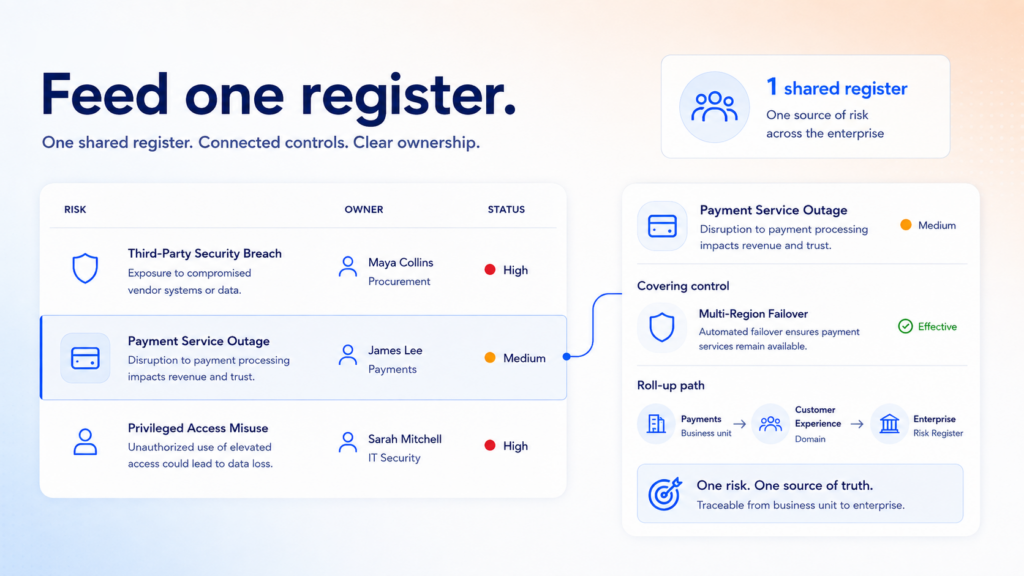
Each risk shows the control that covers it
-
Snapshots show how a rating moved since last cycle
What changes for your units, your team, and your board
Archer Evolv offre funzionalità di livello aziendale per aziende di ogni dimensione.
Consistency across units
Your divisions rate against one scale. A high risk in operations means what it means in manufacturing, and the comparison holds up under questioning.
Decisions on current data
Nightly snapshots and tracked thresholds put current exposure in front of leaders, not the number someone last dropped into a deck.
Accountability, by name
Every risk, control, indicator, and loss event carries a named owner and a due date. Work lands with the person who can act on it.

One record, nine ways in
Archer Evolv è stato progettato specificamente per soddisfare le esigenze dei team GRC e degli utenti aziendali.
1
Ask the record anything
Anyone with permission queries the risk record in plain language, and Archer Evolv Foundation answers with a citation. No report build, no wait.
2
One taxonomy, defined once
Define enterprise risks and the intermediate risks beneath them once. Every unit assesses against that structure, and comparisons between divisions hold up.
3
Risks paired with their controls
Capture impact, likelihood, owner, and status for each risk, then link the controls that mitigate it. The register shows coverage instead of a list of worries.
4
Assessments your owners will finish
Scope by unit or process, generate an RCSA for each, and route it automatically. The plant manager confirms what still applies instead of facing a blank form.
5
Indicators that warn you early
Set red and amber thresholds, numeric or qualitative, and Archer tasks the metric owner on the frequency you choose. Trends surface before a loss does.
6
Loss events with a root cause
Log occurrence, discovery, and loss dates, work the root cause and impact analysis, then link the event back to the risk and the control involved.
How your team will use Archer
Enterprise risk management
Your units feed one register assessed against one taxonomy, and each risk shows the control covering it. Leadership gets an exposure view that survives questioning, and Foundation takes the follow up straight from the record.
Operational risk management
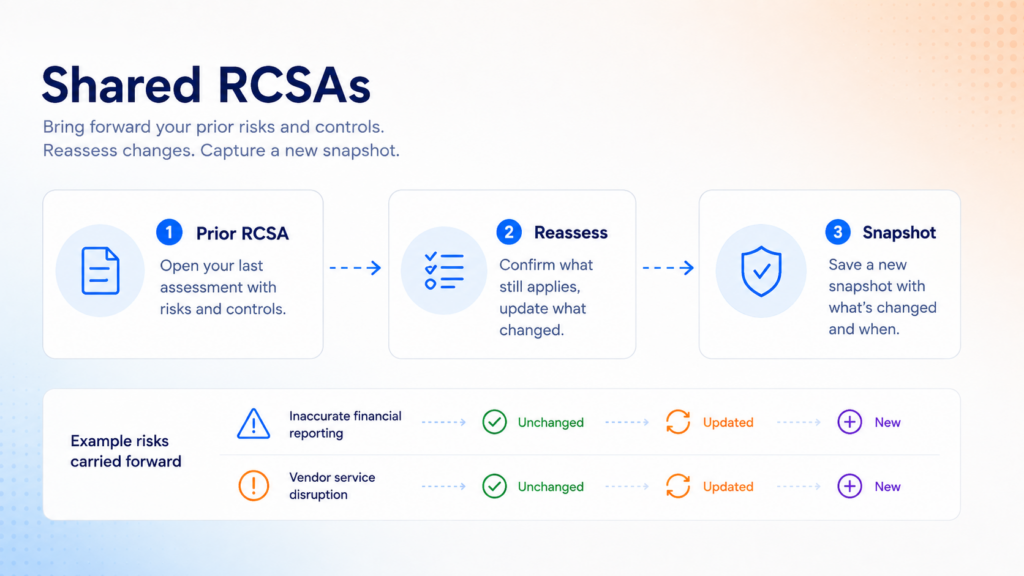
Business and process managers open an RCSA that already holds their risks and controls. They confirm what still applies, reassess what changed, and add what is new. Your team reviews and approves, and Archer snapshots the result.
Loss and indicator management
Your metric owners report indicators against red and amber thresholds, and anyone can log a loss event for root cause and impact analysis. Both tie back to the risks they touch, which puts evidence behind a rating instead of memory.
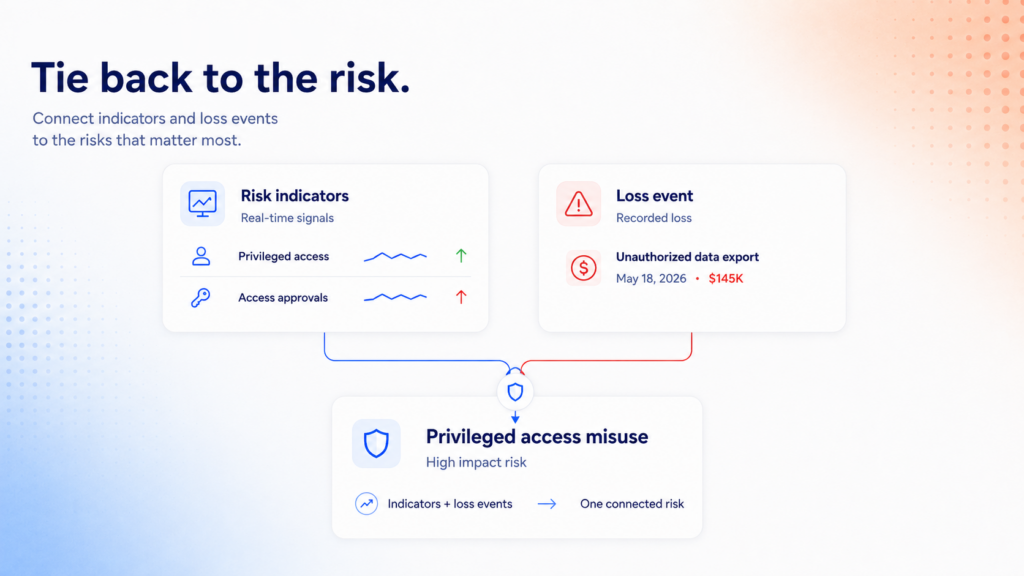
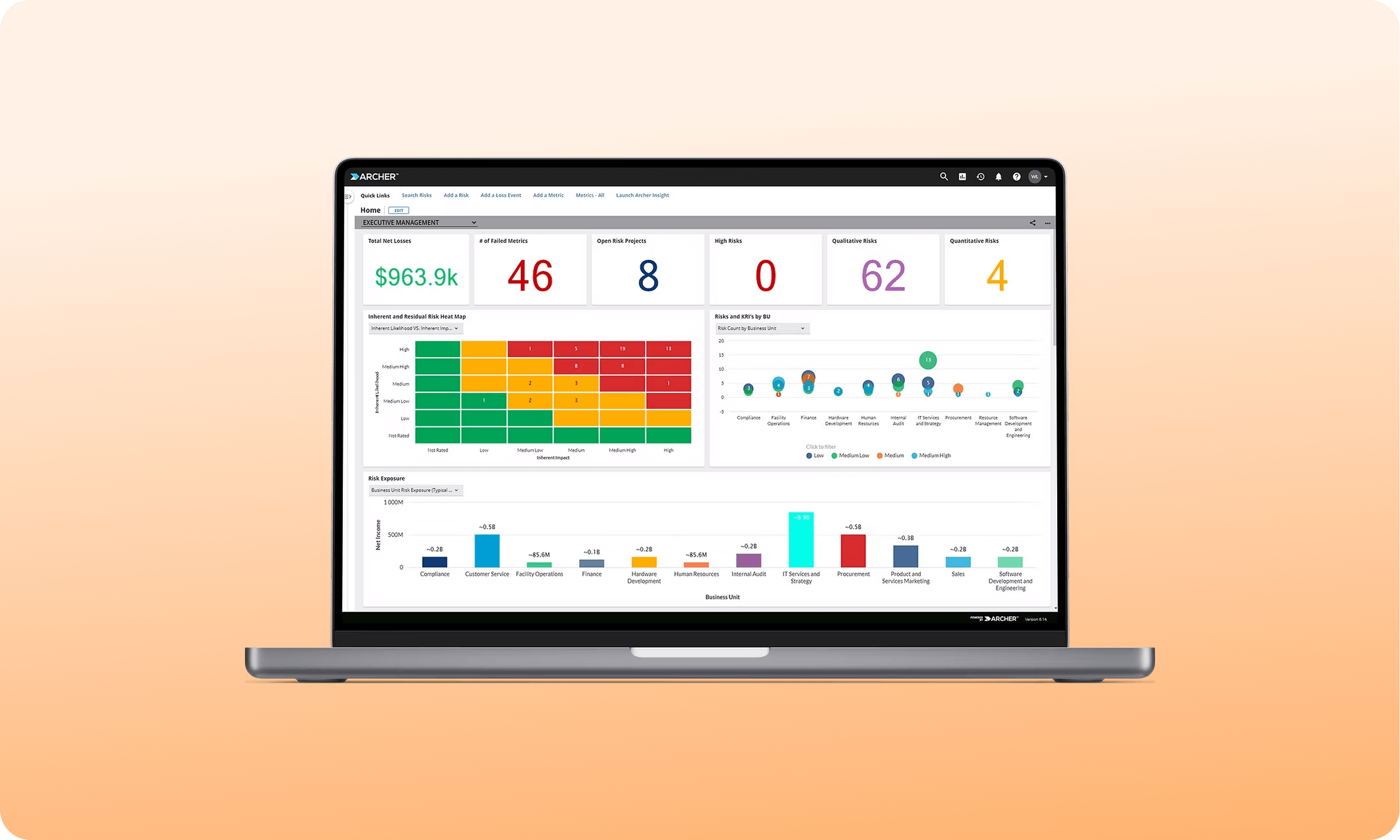
Le immagini riportate sopra non sono screenshot reali del prodotto.
Everything you need, nothing you don’t
Archer Evolv consente di adottare una strategia integrata per tutte le funzioni relative alla gestione dei rischi e alla conformità.
-
Enterprise risk register
Every risk, by owner and by unit
-
Linked control library
Controls mapped to the risks they cover
-
RCSA campaign workflow
Scoped, routed, reviewed, approved
-
Loss event intake and review
Logged, analyzed, and linked back to risk
-
Key indicator monitoring
Thresholds tracked, owners tasked each cycle
-
Risk and loss dashboards
Prebuilt views for managers and the board
Seven questions to ask your own program
Scopri come Archer GRC si posiziona rispetto agli strumenti generici e alle soluzioni aziendali personalizzate.
Generic AI Tools
Fast, but blind to your program
Ecco cosa riceverai
-
A general-purpose model
-
Confidence signal: None, it answers the same whether it’s right or not
-
Record update: None, you do it yourself
-
Guardrails: None built in
Archer
Progettato per i team che necessitano di visibilità e controllo in tempo reale.
Ecco cosa riceverai
-
Name your top ten enterprise risks right now
-
Show how your top risk moved since last quarter
-
Tell the board which controls cover that risk
-
Launch a full assessment cycle this week
-
See an indicator breach before the loss
-
Tie last quarter’s loss to a rating you changed
-
Hand leadership a view without building it
Traditional Database
Holds the data, but doesn’t act on it
Ecco cosa riceverai
-
Whatever’s in the tables, current as of the last load
-
Confidence signal: None, it was never asked to judge anything
-
Record update: Manual entry or batch load, no reasoning applied
-
Guardrails: None built in, enforcement happens outside the database if at all
Scopri i nostri casi di studio

Eastern Bank utilizza Archer per ottimizzare i processi aziendali e semplificare la conformità normativa
- Visualizza il caso di studio:
- Visualizza il caso di studio: Banorte Bank ottiene un quadro preciso dei rischi grazie ad Archer
- Visualizza il caso di studio: Intuitive Surgical è passata ad Archer SaaS per intraprendere un percorso verso una gestione del rischio più efficace
- Visualizza il caso di studio: Resilienza operativa per gli istituti di servizi finanziari
Oltre 1.300 organizzazioni utilizzano Archer®, tra cui metà delle aziende della classifica Fortune 500 e 37 delle prime 50 banche mondiali. Scopri quali sfide hanno dovuto affrontare i loro team, cosa hanno realizzato e cosa è cambiato.
Eastern Bank utilizza Archer per ottimizzare i processi aziendali e semplificare la conformità normativa

Banorte Bank ottiene un quadro preciso dei rischi grazie ad Archer

Intuitive Surgical è passata alla piattaforma SaaS Archer per intraprendere un percorso verso una gestione del rischio più efficace
Resilienza operativa per gli istituti di servizi finanziari
Scelto con fiducia dai team che si assumono il rischio
I responsabili dei settori rischio, conformità e audit raccontano cosa è cambiato dopo l’implementazione di Archer Evolv.

Abbiamo riconosciuto la necessità di una piattaforma software GRC che fosse fondamentale per la nostra capacità di migliorare e trasformare i nostri processi aziendali in materia di rischio e conformità.
Archer è la fonte di verità e ci fornisce un'ottima traccia di audit. In qualità di compagnia assicurativa, siamo sottoposti a verifiche da parte di ogni ente governativo. Ora possiamo dire: “Ecco il nostro archivio, date un’occhiata”.

L'aggregazione dei rischi è un aspetto fondamentale per noi: ci permette di individuare dove si concentrano i rischi all'interno dell'organizzazione e di garantire una maggiore visibilità ai consigli di amministrazione e ai dirigenti.

Turkcell utilizza Archer come principale strumento di GRC all’interno dell’azienda. Ci offre un quadro di governance trasparente e sicuro.

Archer ci offre la possibilità di sintetizzare le cose in cifre e dettagli concreti anziché in generalità. Si tratta di una gestione basata sui fatti anziché sull'intuizione o sulla sensazione.

Mette in comunicazione tutte le diverse applicazioni, consentendoti così di sfruttare tali riferimenti incrociati e collegamenti per prendere decisioni aziendali più efficaci, poiché hai tutto a portata di mano in un unico posto.
Le domande che ci vengono poste più spesso
Plenty of vendors have one of these. The defensible position is having all three on the same foundation.
A list of business units with owners is the only requirement. Archer recommends a risk taxonomy in two levels, enterprise risks and intermediate risks beneath them. An existing register, control list, and loss history help but do not gate a start.
Yes. Changing the rating factors is a primary feature, not a customization you fight for. The RCSA keeps working, though your team should update the Risk and Control Matrix report and the snapshot data feeds so new fields carry into reporting.
Archer builds the solution on COSO for enterprise risk management, ISO 31000 for assessment method, the NIST Risk Management Framework for a risk based approach to systems, and Basel II for operational risk. Align the program, then run it in Archer.
An administrator shares a direct link to the Loss Event application with any provisioned user holding the create role. For employees outside Archer, build an Archer Engage form and share that link, so intake reaches people who never log in.
Business impact analysis results from the Resilience solution roll into a process based RCSA, so criticality, RTO, RPO, and MTPD sit beside your risk ratings. Archer Evolv Foundation then queries across domains in plain language and cites the record.