Sustainability data everyone in the room can defend
From the analyst entering a meter reading to the board signing the disclosure, every role works from one record that traces back to its source.
25 years in market · 1,200+ clients across 48 countries
-
1,500+
Clienti in 48 paesi
-
50%+
Tra i clienti della classifica Fortune 500
-
65%
Delle organizzazioni che dedicano maggiore impegno alla quantificazione
-
15,000+
Membri della comunità di rischio Archer
The same sustainability record, seen the way each role needs it
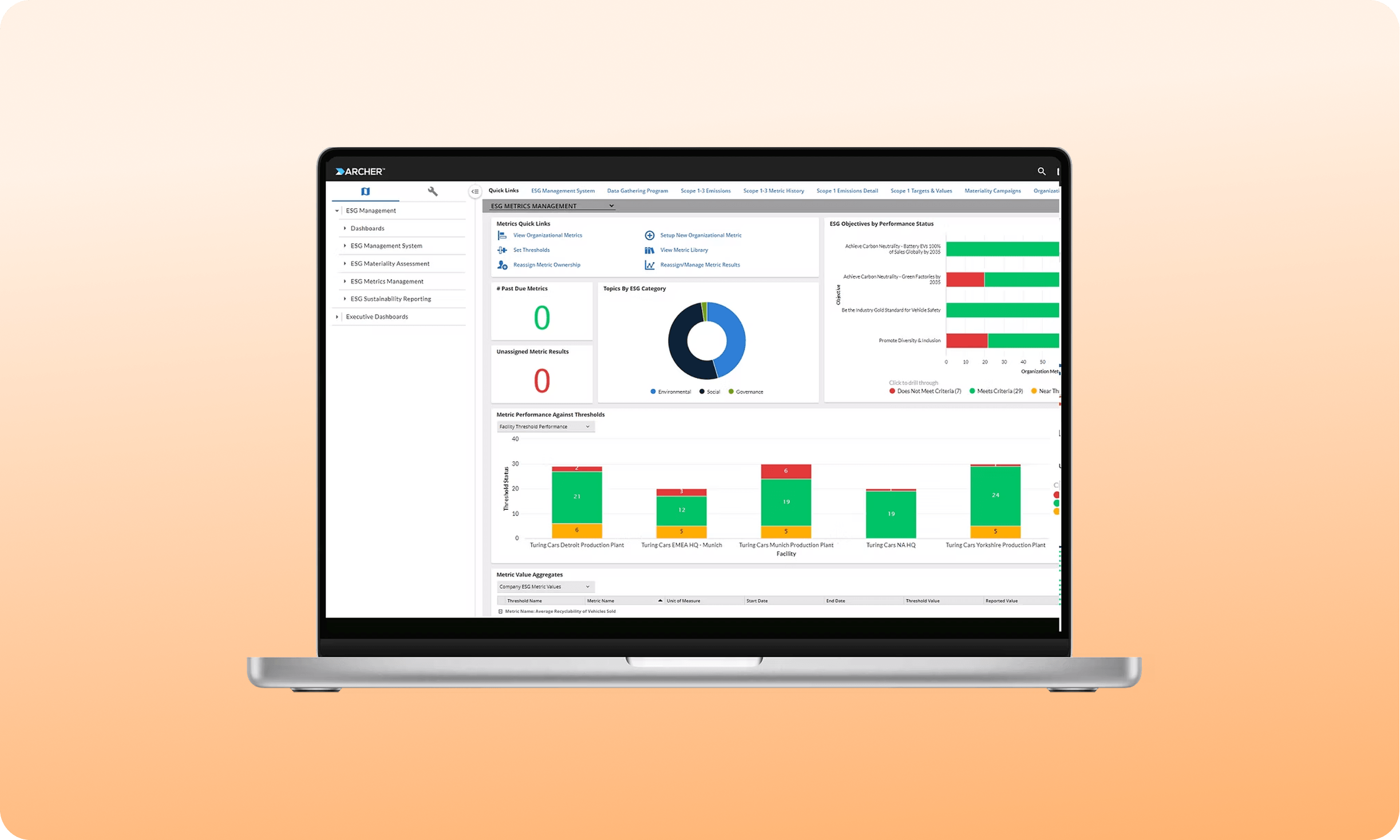
A facility manager enters a reading once. It rolls up through the business unit and the division into the figure leadership reviews, so nobody retypes it along the way and nobody argues later about which version was right.
-
Sustainability teams gather once and report many times
-
Leaders watch targets move without chasing files
-
Board and assurance stop taking figures on faith
-
Genera report pronti per il consiglio di amministrazione in pochi minuti, anziché in giorni
One sustainability data set, and three very different jobs to do
Each role in your organization sees the same data, but in the way their job requires.
For sustainability teams
Each metric goes to whoever owns the data, and you see what came back and what ran late without opening a spreadsheet. Chasing stops being the job.
For the ESG program lead
You know where every target stands and where the program slips, and you know it before the board asks. That changes what the meeting is for.
For the CFO and the CRO
Sustainability reporting runs on the system that already holds your risk and compliance numbers. One security review, one control set, one answer.

The parts of a sustainability reporting program that take longest
Archer ESG Management handles the work that slows most programs down.
1
Double materiality
Score impact and financial materiality on forms that follow the ESRS shape, and end the assessment with a result your assurance provider can follow back.
2
Standards library
Pull current SASB, GRI, TCFD, ESRS, and IFRS metrics from one library and choose what fits your sector. Nobody rebuilds the mapping by hand every year.
3
Finding the data owner
Nominate and approve the person who owns a number before you ask them for it, so a metric never lands in an empty inbox once the reporting window opens.
4
Thresholds and targets
Set a baseline and a goal, and the thresholds spread across the collection calendar. A metric that drifts shows up in the report months before year end.
5
Hierarchy rollup
Collect at facility, business unit, division, or company level and roll it upward. One data set then answers a site question and a group disclosure alike.
6
Disclosure reporting
Assemble narratives and metrics against TCFD, ESRS, IFRS, and GRI 2 in one place, so the statement comes together from the record your team already keeps.
How Archer works across your ESG program
For sustainability teams
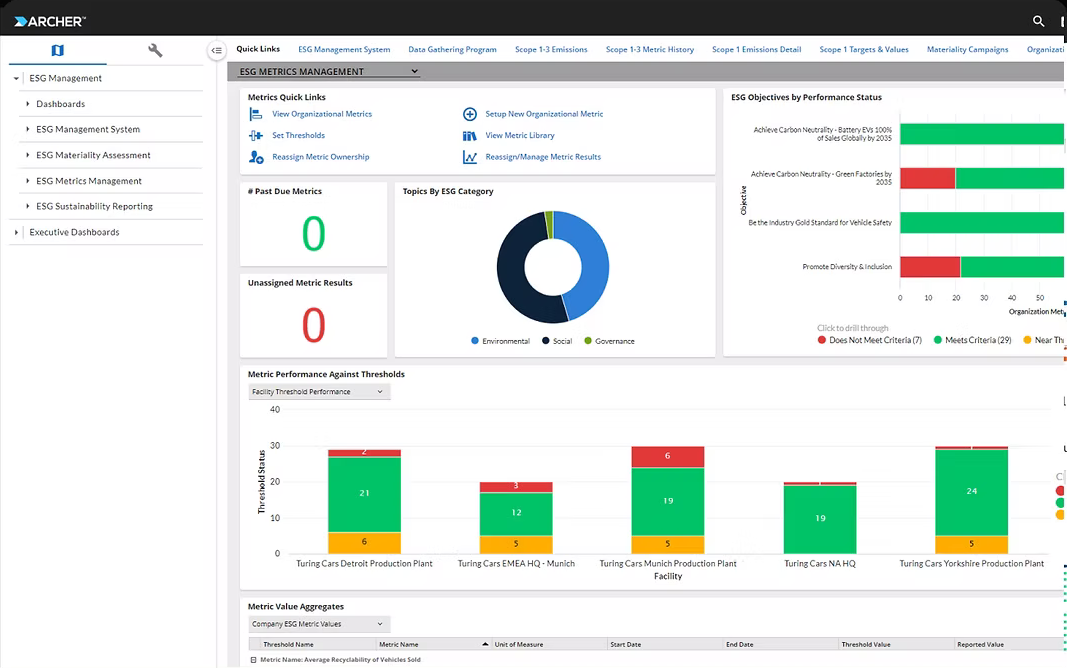
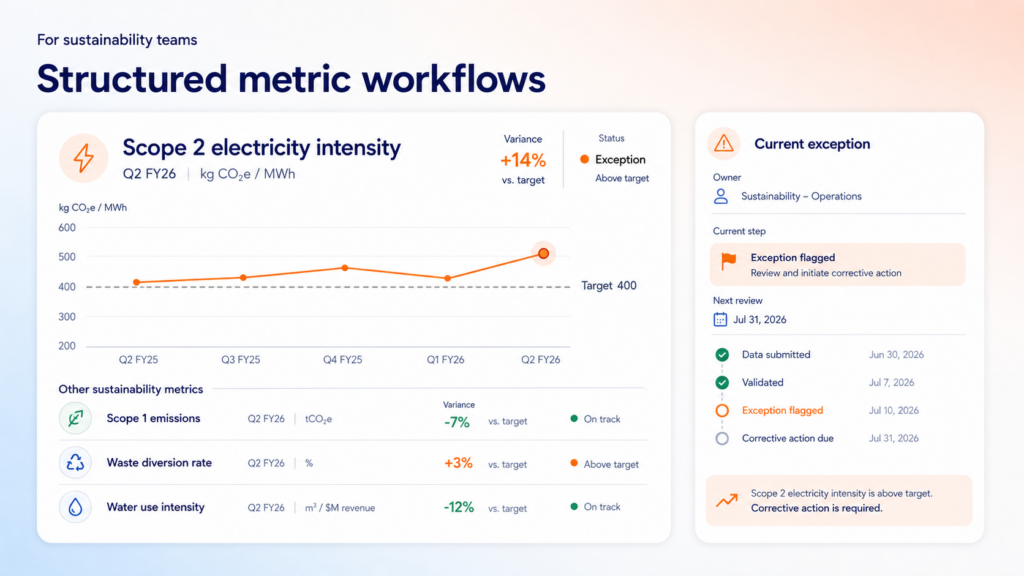
Set up the program structure once and run the materiality assessment. Metrics generate for each business unit that owes them, requests reach the people who own the numbers, and late items surface without anyone hunting for them.
For sustainability leadership
Targets, thresholds, and open actions sit in one dashboard instead of a quarterly pull. When a metric drifts off threshold, you see it and raise an issue against it while the year still has room to move the number.
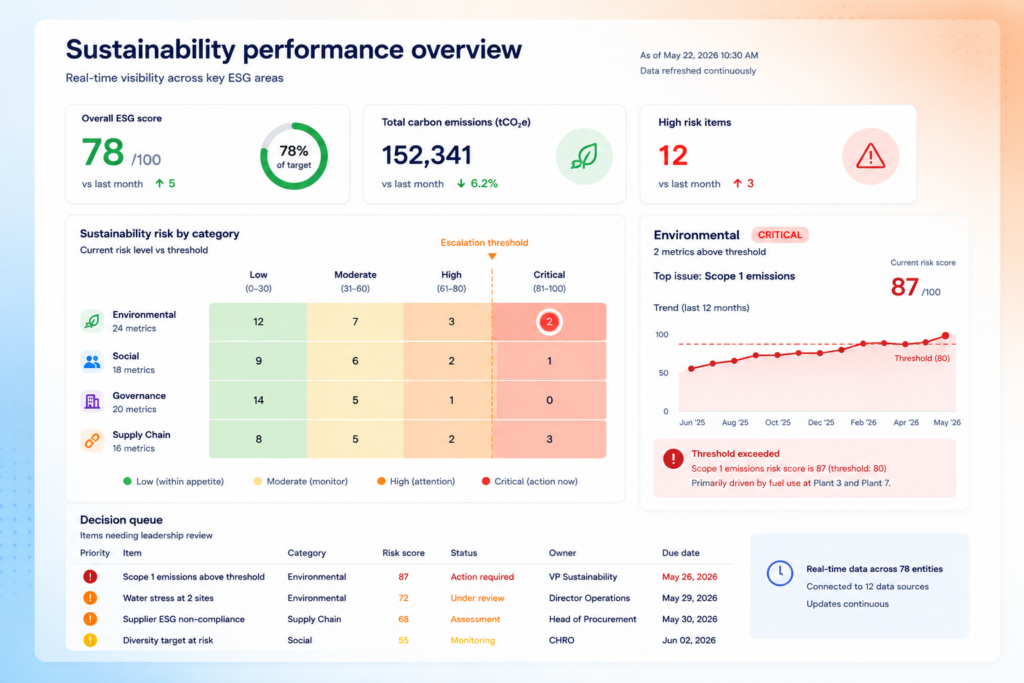
For the board and assurance
Every figure in the disclosure points back to the person who supplied it, the period it covers, and the standard it maps to. Your assurance provider follows that trail without a document hunt.
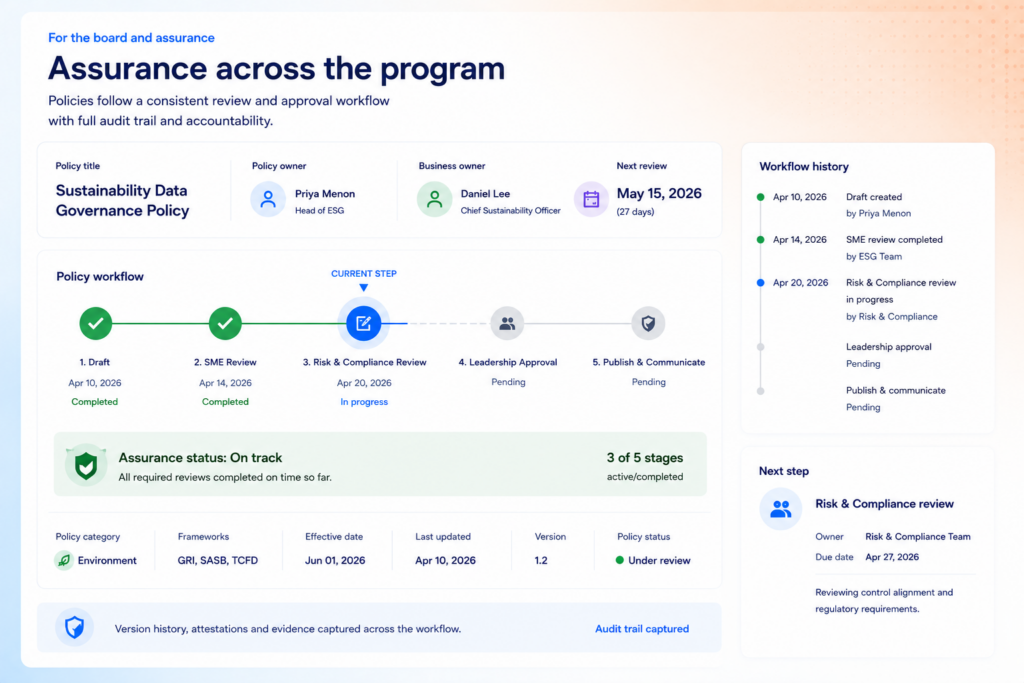
Le immagini riportate sopra non sono screenshot reali del prodotto.
Everything you need, nothing you don’t
Each capability in Archer ESG Management serves the role that needs it.
-
Double materiality calculator
Settle what is material and show your work
-
ESG standards library
SASB, GRI, TCFD, ESRS, and IFRS in one place
-
Metric collection and results
Requests reach owners, answers come back tracked
-
Targets, actions, and owners
Every commitment carries work and a date
-
Disclosure management
Narratives and metrics come together in one report
-
ESG portfolio management
Investors measure ESG across portfolio companies
What each role gains over a spreadsheet program
Moving from scattered tools to one platform changes what every role in your program can do.
Spreadsheets and point tools
Manual tracking across disconnected systems.
Ecco cosa riceverai
-
Chase owners by email
-
Rekey every figure
-
Program status arrives late
-
Numbers with no visible provenance
-
One more system to secure
Archer ESG Management
One record everyone defends together.
Ecco cosa riceverai
-
Requests go out and come back in one system
-
Targets and thresholds update as data lands
-
Sustainability reports from the system risk uses
-
Every figure names the person who supplied it
-
Controls and integrations you already reviewed
Conformità fai da te
Fogli di calcolo, unità di rete condivise e conoscenze non documentate.
Ecco cosa riceverai
-
Monitoraggio manuale
-
Infrastruttura personalizzata
-
Aggiornamenti personalizzati
Scopri i nostri casi di studio

Eastern Bank utilizza Archer per ottimizzare i processi aziendali e semplificare la conformità normativa
- Visualizza il caso di studio:
- Visualizza il caso di studio: Banorte Bank ottiene un quadro preciso dei rischi grazie ad Archer
- Visualizza il caso di studio: Intuitive Surgical è passata ad Archer SaaS per intraprendere un percorso verso una gestione del rischio più efficace
- Visualizza il caso di studio: Resilienza operativa per gli istituti di servizi finanziari
Oltre 1.300 organizzazioni utilizzano Archer®, tra cui metà delle aziende della classifica Fortune 500 e 37 delle prime 50 banche mondiali. Scopri quali sfide hanno dovuto affrontare i loro team, cosa hanno realizzato e cosa è cambiato.
Eastern Bank utilizza Archer per ottimizzare i processi aziendali e semplificare la conformità normativa

Banorte Bank ottiene un quadro preciso dei rischi grazie ad Archer

Intuitive Surgical è passata alla piattaforma SaaS Archer per intraprendere un percorso verso una gestione del rischio più efficace
Resilienza operativa per gli istituti di servizi finanziari
Scelto con fiducia dai team che si assumono il rischio
I responsabili dei settori rischio, conformità e audit raccontano cosa è cambiato dopo l’implementazione di Archer Evolv.

Abbiamo riconosciuto la necessità di una piattaforma software GRC che fosse fondamentale per la nostra capacità di migliorare e trasformare i nostri processi aziendali in materia di rischio e conformità.
Archer è la fonte di verità e ci fornisce un'ottima traccia di audit. In qualità di compagnia assicurativa, siamo sottoposti a verifiche da parte di ogni ente governativo. Ora possiamo dire: “Ecco il nostro archivio, date un’occhiata”.

L'aggregazione dei rischi è un aspetto fondamentale per noi: ci permette di individuare dove si concentrano i rischi all'interno dell'organizzazione e di garantire una maggiore visibilità ai consigli di amministrazione e ai dirigenti.

Turkcell utilizza Archer come principale strumento di GRC all’interno dell’azienda. Ci offre un quadro di governance trasparente e sicuro.

Archer ci offre la possibilità di sintetizzare le cose in cifre e dettagli concreti anziché in generalità. Si tratta di una gestione basata sui fatti anziché sull'intuizione o sulla sensazione.

Mette in comunicazione tutte le diverse applicazioni, consentendoti così di sfruttare tali riferimenti incrociati e collegamenti per prendere decisioni aziendali più efficaci, poiché hai tutto a portata di mano in un unico posto.
Le domande che ci vengono poste più spesso
Straight answers from the buying committee, in the order they ask.
You map your own company, division, business unit, and facility structure into Archer, then pick the standards that apply. Metric requests follow that structure and reach the people who already own the numbers.
It narrowed both who reports and how much. The Commission’s revised standards, adopted in July 2026, cut mandatory datapoints by more than 60 percent and total datapoints by more than 70 percent. What you owe still starts with materiality.
It does. California expects large companies to file emissions data, Regulation S-K still calls for material climate risk, and your customers ask either way. The federal picture keeps moving, and the underlying data collection does not change with it.
That depends on how much of your data already sits in a system rather than in someone’s inbox. Most programs stand up the structure and the materiality assessment first, then bring metrics online by standard.
Archer imports data from the systems you run and sends metric requests out through Archer Engage, so people outside the platform answer without an Archer account. Your security team reviews one platform.
No. Start wherever the deadline is. If an ESRS materiality assessment is the immediate problem, the Double Materiality Calculator runs on its own. If metrics and targets are the problem, start there and add the reporting piece when the program grows.