Sustainability data everyone in the room can defend
From the analyst entering a meter reading to the board signing the disclosure, every role works from one record that traces back to its source.
25 years in market · 1,200+ clients across 48 countries
-
1,500+
Clients across 48 countries
-
50%
Of clients in the Fortune 500
-
65%
Of organizations putting more effort into quantification
-
15,000+
Members in the Archer risk community
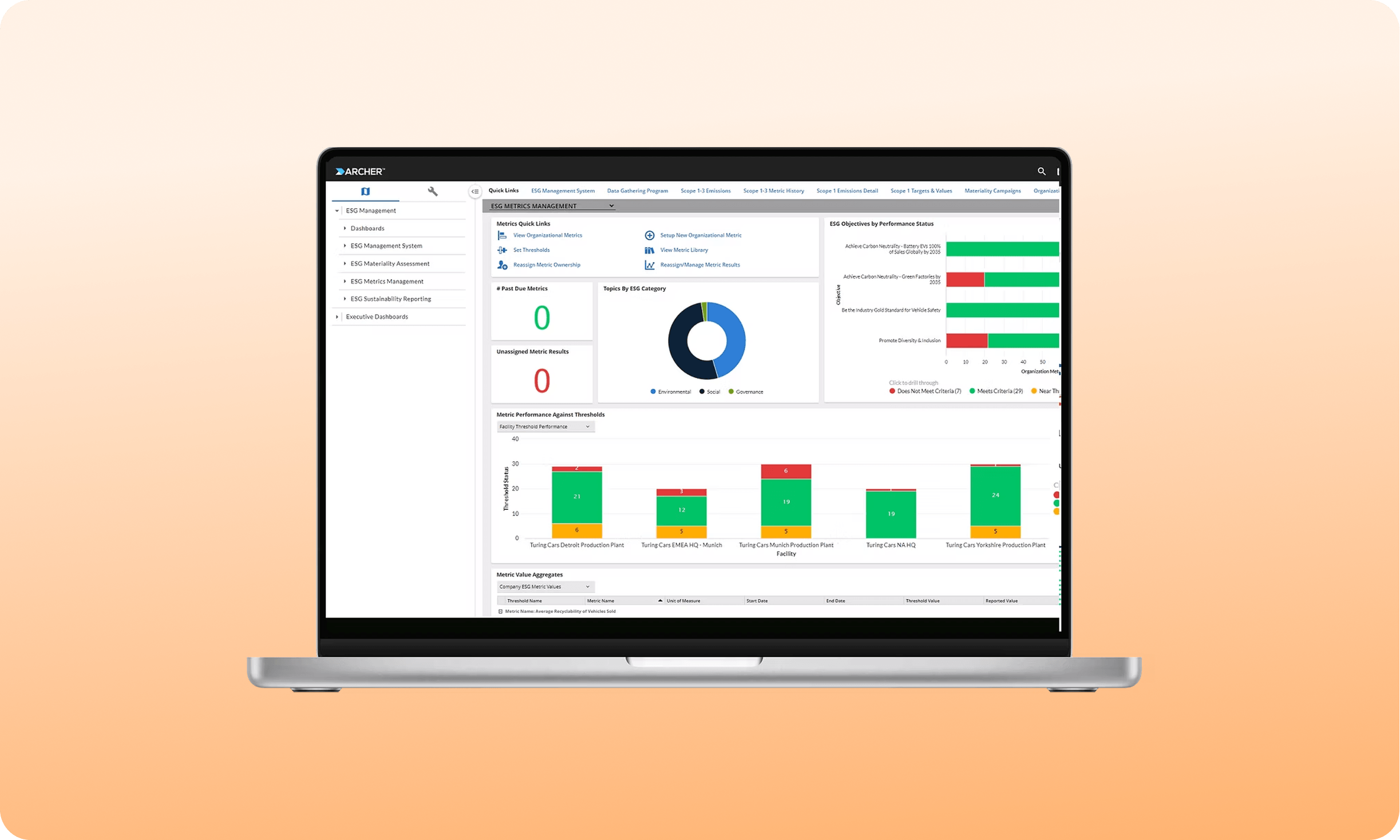
The same sustainability record, seen the way each role needs it
A facility manager enters a reading once. It rolls up through the business unit and the division into the figure leadership reviews, so nobody retypes it along the way and nobody argues later about which version was right.
-
Sustainability teams gather once and report many times
-
Leaders watch targets move without chasing files
-
Board and assurance stop taking figures on faith
-
Generate board-ready reports in minutes, not days
One sustainability data set, and three very different jobs to do
Each role in your organization sees the same data, but in the way their job requires.
For sustainability teams
Each metric goes to whoever owns the data, and you see what came back and what ran late without opening a spreadsheet. Chasing stops being the job.
For the ESG program lead
You know where every target stands and where the program slips, and you know it before the board asks. That changes what the meeting is for.
For the CFO and the CRO
Sustainability reporting runs on the system that already holds your risk and compliance numbers. One security review, one control set, one answer.

The parts of a sustainability reporting program that take longest
Archer ESG Management handles the work that slows most programs down.
1
Double materiality
Score impact and financial materiality on forms that follow the ESRS shape, and end the assessment with a result your assurance provider can follow back.
2
Standards library
Pull current SASB, GRI, TCFD, ESRS, and IFRS metrics from one library and choose what fits your sector. Nobody rebuilds the mapping by hand every year.
3
Finding the data owner
Nominate and approve the person who owns a number before you ask them for it, so a metric never lands in an empty inbox once the reporting window opens.
4
Thresholds and targets
Set a baseline and a goal, and the thresholds spread across the collection calendar. A metric that drifts shows up in the report months before year end.
5
Hierarchy rollup
Collect at facility, business unit, division, or company level and roll it upward. One data set then answers a site question and a group disclosure alike.
6
Disclosure reporting
Assemble narratives and metrics against TCFD, ESRS, IFRS, and GRI 2 in one place, so the statement comes together from the record your team already keeps.
How Archer works across your ESG program
For sustainability teams
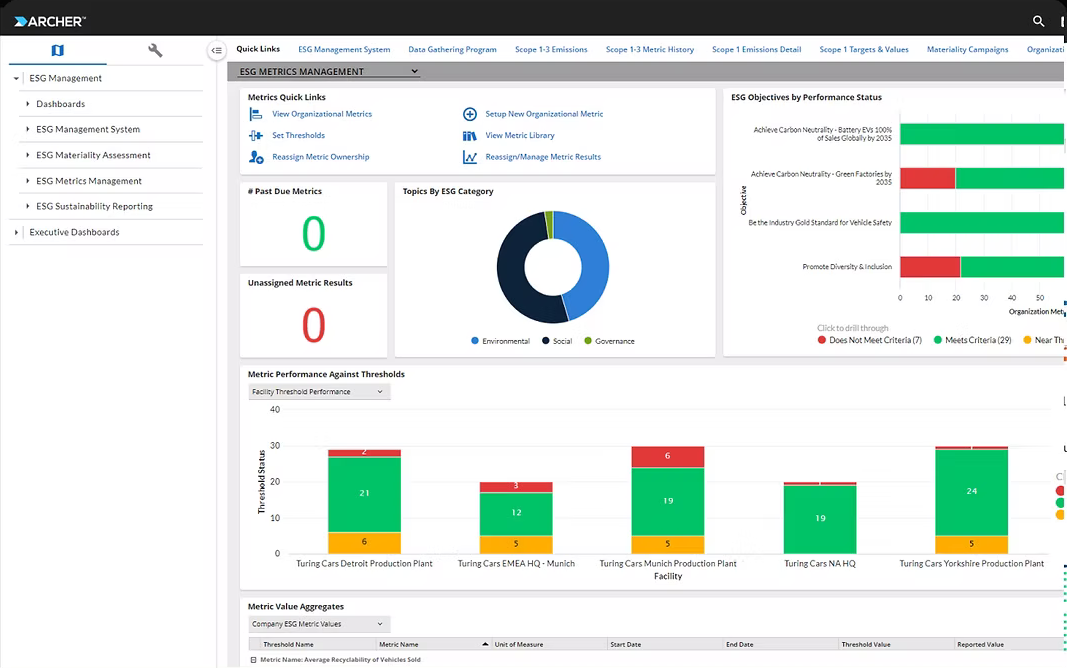
Set up the program structure once and run the materiality assessment. Metrics generate for each business unit that owes them, requests reach the people who own the numbers, and late items surface without anyone hunting for them.
For sustainability leadership
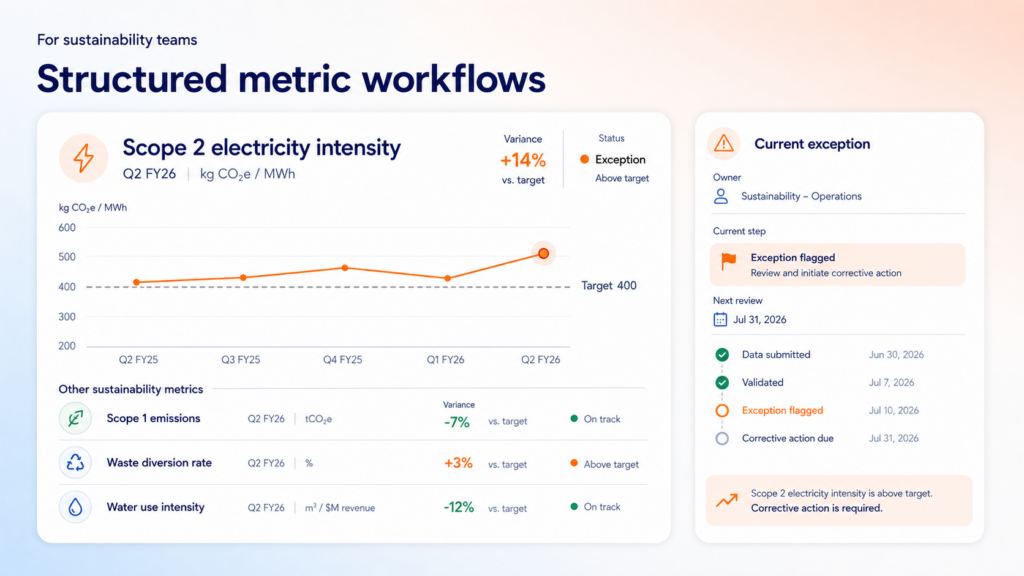
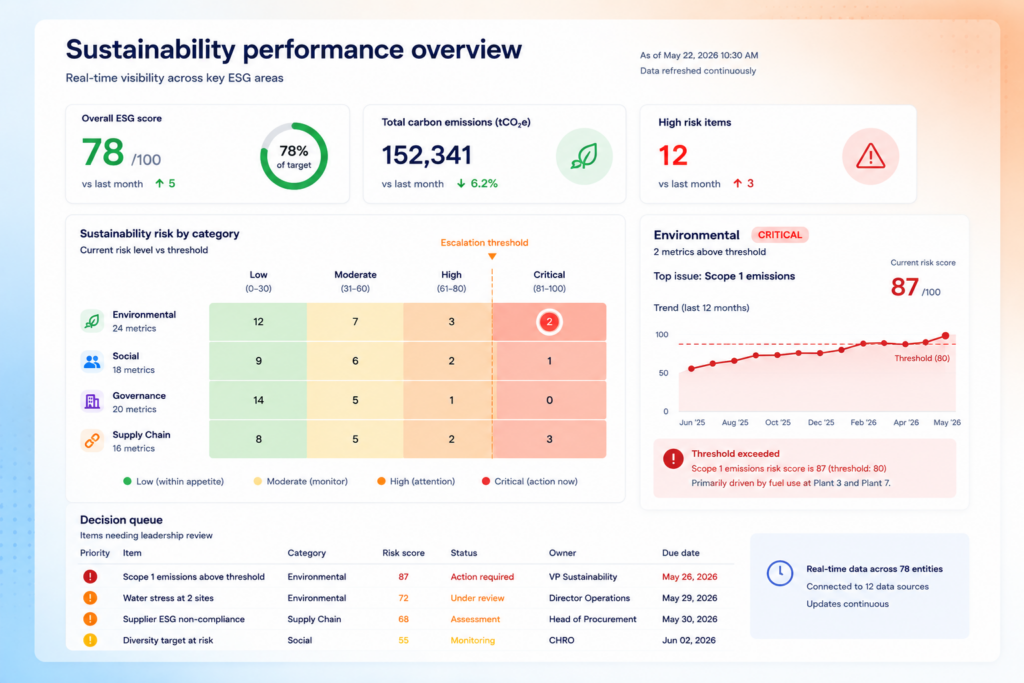
Targets, thresholds, and open actions sit in one dashboard instead of a quarterly pull. When a metric drifts off threshold, you see it and raise an issue against it while the year still has room to move the number.
For the board and assurance
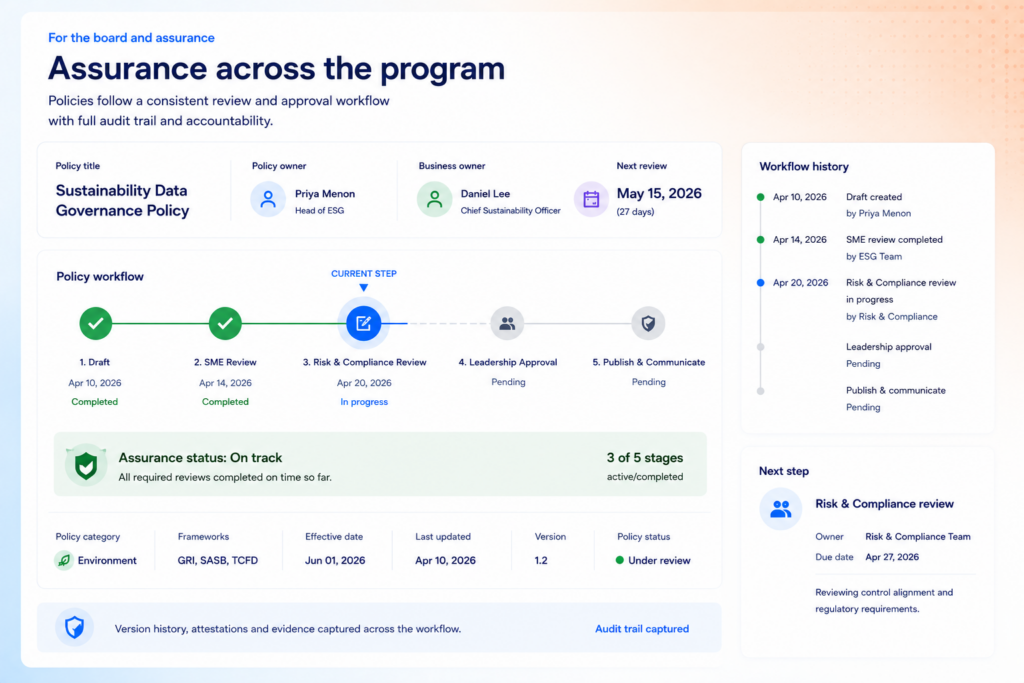
Every figure in the disclosure points back to the person who supplied it, the period it covers, and the standard it maps to. Your assurance provider follows that trail without a document hunt.
The images used above are not actual product screenshots.
Everything you need, nothing you don’t
Each capability in Archer ESG Management serves the role that needs it.
-
Double materiality calculator
Settle what is material and show your work
-
ESG standards library
SASB, GRI, TCFD, ESRS, and IFRS in one place
-
Metric collection and results
Requests reach owners, answers come back tracked
-
Targets, actions, and owners
Every commitment carries work and a date
-
Disclosure management
Narratives and metrics come together in one report
-
ESG portfolio management
Investors measure ESG across portfolio companies
What each role gains over a spreadsheet program
Moving from scattered tools to one platform changes what every role in your program can do.
Spreadsheets and point tools
Manual tracking across disconnected systems.
Here’s what you get
-
Chase owners by email
-
Rekey every figure
-
Program status arrives late
-
Numbers with no visible provenance
-
One more system to secure
Archer ESG Management
One record everyone defends together.
Here’s what you get
-
Requests go out and come back in one system
-
Targets and thresholds update as data lands
-
Sustainability reports from the system risk uses
-
Every figure names the person who supplied it
-
Controls and integrations you already reviewed
DIY Compliance
Spreadsheets, shared drives, and tribal knowledge.
Here’s what you get
-
Manual tracking
-
Custom infrastructure
-
Custom updates
Explore Our Case Studies

Eastern Bank Uses Archer to Drive Business Processes and Streamline Compliance
- View case study:
- View case study: Banorte Bank Gains Accurate Picture of Risk with Archer
- View case study: Intuitive Surgical Migrated to Archer SaaS for their journey to empowered risk management
- View case study: Operational Resilience for Financial Services Institutions
More than 1,300 organizations run on Archer®, including half the Fortune 500 and 37 of the top 50 global banks. See what their teams were up against, what they built, and what changed.
Eastern Bank Uses Archer to Drive Business Processes and Streamline Compliance

Banorte Bank Gains Accurate Picture of Risk with Archer

Intuitive Surgical Migrated to Archer SaaS for their journey to empowered risk management
Operational Resilience for Financial Services Institutions
Trusted by the teams who carry the risk
Risk, compliance, and audit leaders on what changed after Archer Evolv was implemented.

We recognized the need for a GRC software platform that would be central to our ability to improve and transform our enterprise risk and compliance processes.

Archer is the source of truth, and it creates a nice audit trail for us. As an insurance company, we're audited by every governmental entity. Now we can say, here's our repository, take a look.

Risk aggregation is a big point for us, to see where our risk is located within the organization, and to give greater visibility for boards and executives.

Turkcell is using Archer as the main GRC tool in the company. It provides us a transparent and safe governance framework.

Archer gives us the ability to boil things down into numbers and specifics versus generalities. It's management by fact versus intuition or feel.

It connects all the different applications together, so you can use those cross-references and connections to make better business decisions, because you have it all in one place.
Questions we hear most often
Straight answers from the buying committee, in the order they ask.
You map your own company, division, business unit, and facility structure into Archer, then pick the standards that apply. Metric requests follow that structure and reach the people who already own the numbers.
It narrowed both who reports and how much. The Commission’s revised standards, adopted in July 2026, cut mandatory datapoints by more than 60 percent and total datapoints by more than 70 percent. What you owe still starts with materiality.
It does. California expects large companies to file emissions data, Regulation S-K still calls for material climate risk, and your customers ask either way. The federal picture keeps moving, and the underlying data collection does not change with it.
That depends on how much of your data already sits in a system rather than in someone’s inbox. Most programs stand up the structure and the materiality assessment first, then bring metrics online by standard.
Archer imports data from the systems you run and sends metric requests out through Archer Engage, so people outside the platform answer without an Archer account. Your security team reviews one platform.
No. Start wherever the deadline is. If an ESRS materiality assessment is the immediate problem, the Double Materiality Calculator runs on its own. If metrics and targets are the problem, start there and add the reporting piece when the program grows.