AI-powered claims and incident management
Reduce loss, maximize insights, and streamline incident capture with a system your entire enterprise can actually use.
Trusted by enterprise insurance programs · Centralized claims management · AI-powered analytics
-
1,500+
Clients across 48 countries
-
50%+
Of customers in the Fortune 500
-
65%
Of organizations putting more effort into quantification
-
15,000+
Members in the Archer risk community
Insurance data that’s scattered is risk you can’t see
Archer RMIS AI uses AI-powered analytics to optimize renewal workflows, policy administration, claims, and incidents, so you manage claims more effectively and eliminate the error that comes from manual processes.
-
Centralize policies and exposure data across departments
-
Capture and manage incoming claims through one portal
-
Track claims details with pre-built workflows
-
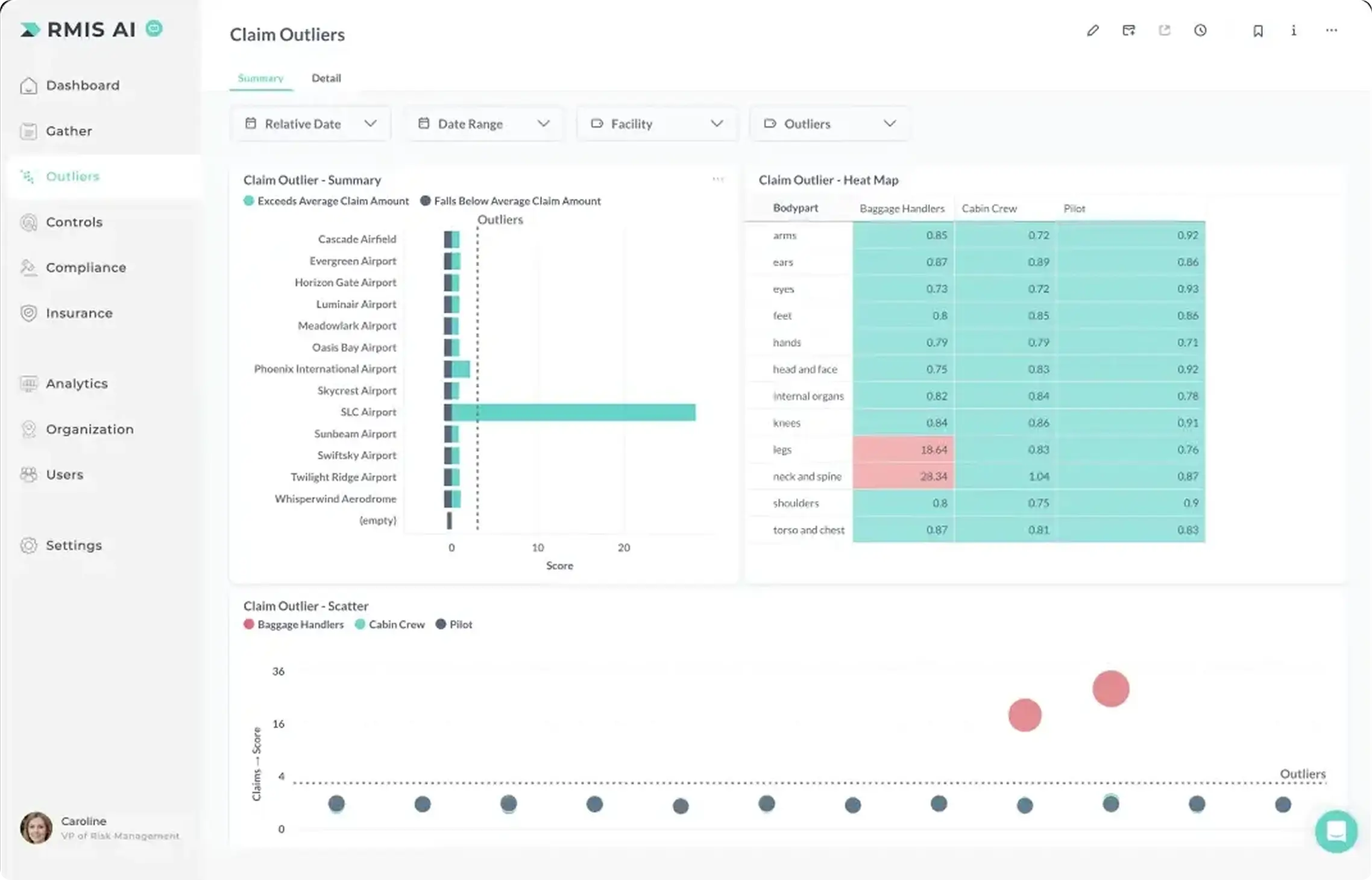
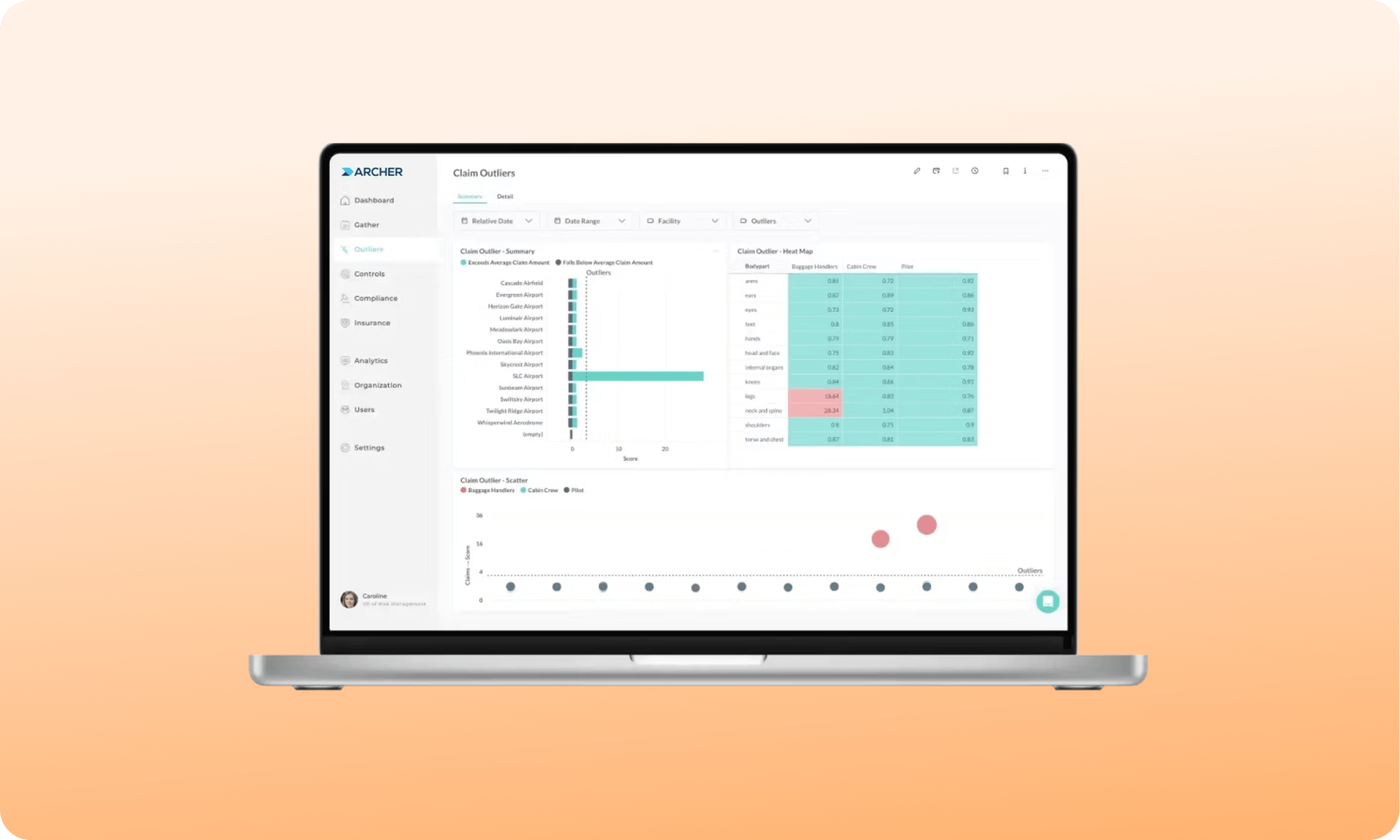
Visualize claims patterns with AI-powered analytics
Everything your insurance program needs
Archer RMIS AI brings policies, claims, and incidents into one connected system.
Powerful analytics
Gain insight into claims patterns and areas for improvement instead of guessing from a spreadsheet.
Streamlined intake
Efficiently capture and manage incoming claims through a centralized portal built for your whole enterprise.
One system of record
Manage policies, claims, and incidents in a central system, eliminating pockets of data and outdated spreadsheets.

Built for how insurance teams actually work
RMIS AI is designed to eliminate manual processes and scattered data across your organization.
1
Insurance & exposure data
Centralize policies and exposure data with streamlined data collection instead of chasing files across departments.
2
Claims management
Track claims details in one place with pre-built workflows and reporting so nothing falls through the cracks.
3
Incident reporting
Capture incident information with severity categorization so your team can act fast and prevent repeat incidents.
4
Analytics and AI
Visualize and understand your data through AI-powered analytics built directly into the platform you already use.
5
Enterprise portal
The claim intake portal is built to be used across the enterprise, not just by dedicated insurance or risk staff.
6
Pattern detection
Surface claims patterns and areas for improvement directly from the data already in the system without separate reporting.
How Archer RMIS AI works across your insurance program
Insurance & exposure data
Centralize policies and exposure data with streamlined data collection instead of chasing files across departments.
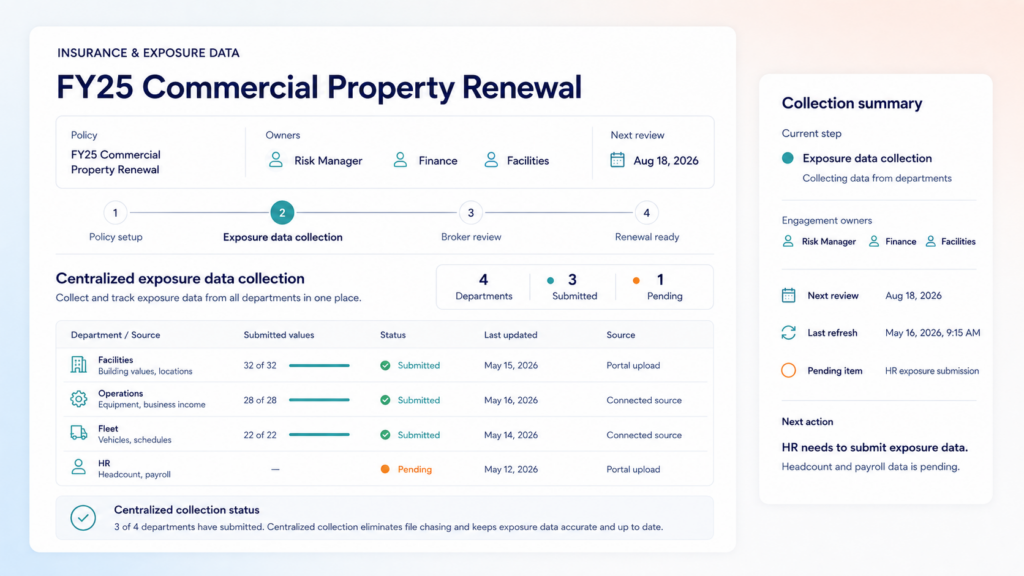
Exposure data scattered across departments means nobody has the full picture until a renewal or a claim forces the issue. Archer centralizes policy and exposure data with one process instead of chasing files
Claims management
Track claims details in one place with pre-built workflows and reporting so nothing falls through the cracks.
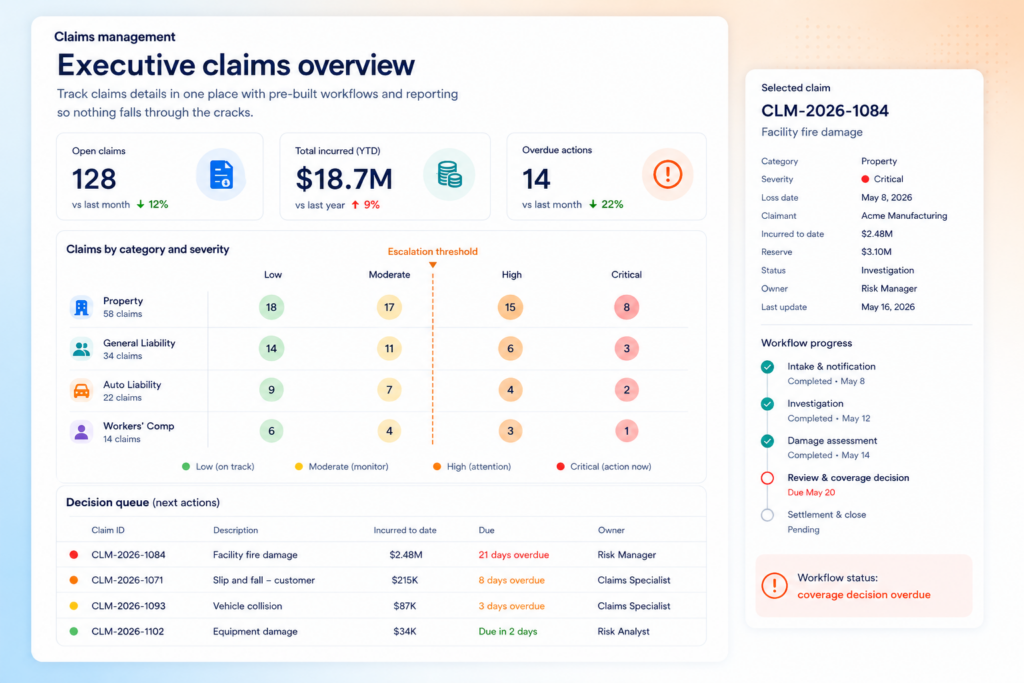
Claims details living in scattered spreadsheets and inboxes are claims that fall through the cracks. Archer tracks every claim in one place with pre-built workflows and reporting, so nothing gets lost between handoffs
Incident reporting
Categorizes incidents by severity fast
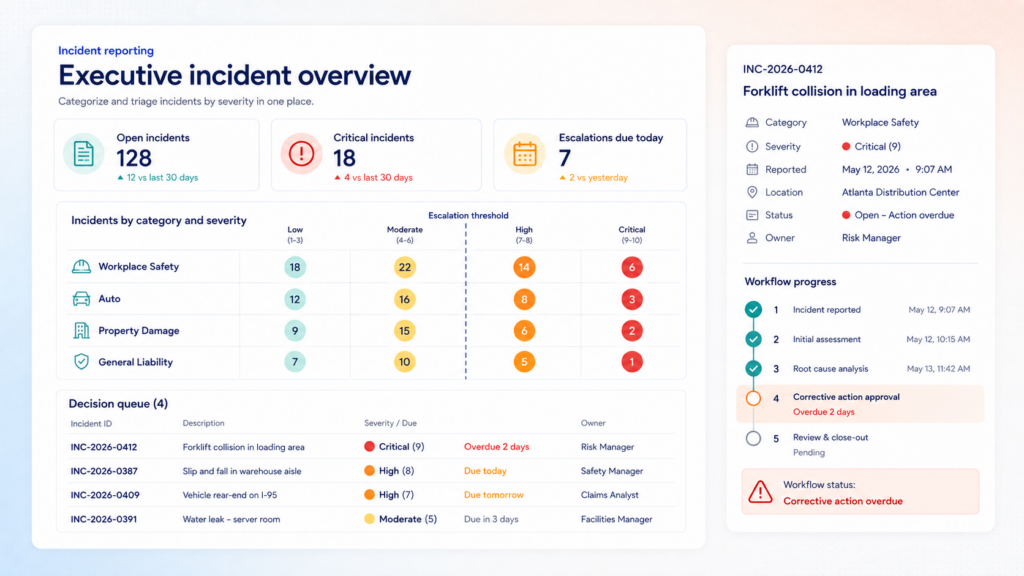
An incident not categorized by severity is an incident that doesn’t get the right response fast enough. Archer captures incident information with severity categorization built in, so teams act fast and prevent repeats
AI-powered analytics
Surfaces claims patterns automatically
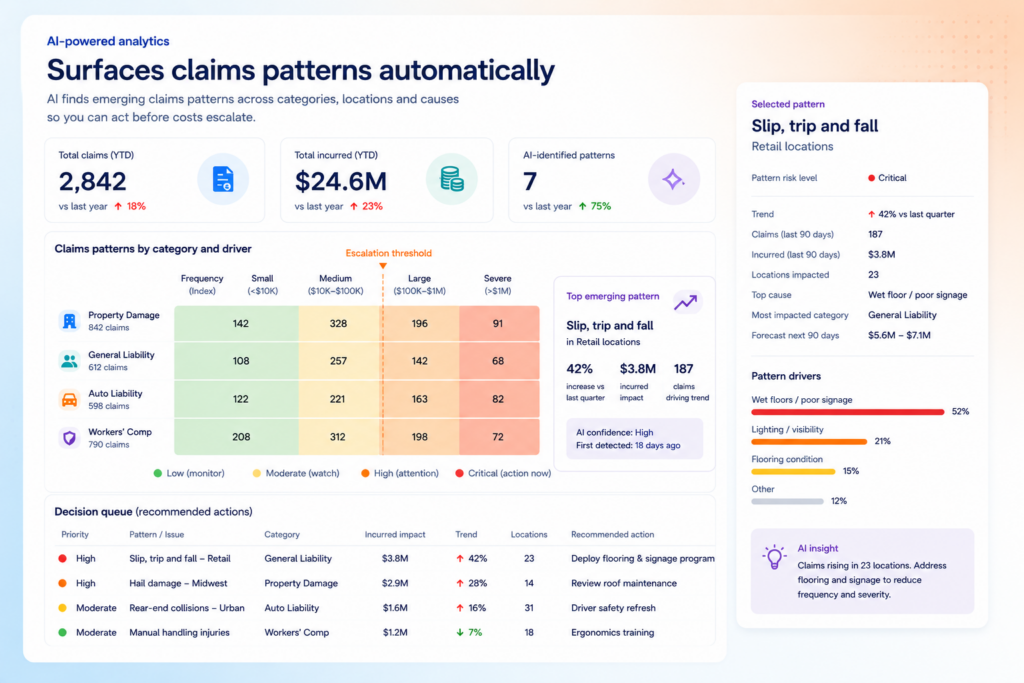
Claims patterns that only surface after a manual reporting project are patterns found too late to act on. Archer’s AI-powered analytics surface trends and improvement areas directly from data already in the system
The images used above are not actual product screenshots.
What your team gains with RMIS AI
Archer RMIS AI enables faster, more accurate claims management across your entire organization.
-
Eliminate manual error
Centralize data to remove guesswork and reduce mistakes from scattered spreadsheets.
-
Faster insights
Make informed business decisions based on claims patterns instead of guessing from a spreadsheet.
-
Enterprise adoption
Get buy-in across departments with a portal designed for everyone, not just risk professionals.
-
Real-time visibility
See all policies, claims, and incidents in one place so nothing falls through the cracks.
-
Faster incident response
Categorize incidents by severity and act fast to prevent repeat occurrences.
-
Reduce loss
Identify trends and areas for improvement to manage claims more effectively.
How Archer RMIS AI compares
See how Archer RMIS AI stacks up against spreadsheets and disconnected tools.
Spreadsheets & shared drives
Manual tracking with no visibility or control.
Here’s what you get
-
Manual data entry
-
No real-time visibility
-
Scattered across departments
Archer RMIS AI
Built for enterprise insurance teams.
Here’s what you get
-
AI-powered analytics
-
Centralized claims management
-
Enterprise-wide intake portal
-
Incident severity categorization
-
Pre-built workflows and reporting
-
One system of record
-
Pattern detection and insights
Point solutions
Separate tools for claims, incidents, and data.
Here’s what you get
-
Disconnected systems
-
Multiple tools to manage
-
No integrated analytics
Explore Our Case Studies

Eastern Bank Uses Archer to Drive Business Processes and Streamline Compliance
Eastern Bank Uses Archer to Drive Business Processes and Streamline Compliance

Banorte Bank Gains Accurate Picture of Risk with Archer

Intuitive Surgical Migrated to Archer SaaS for their journey to empowered risk management
Operational Resilience for Financial Services Institutions
Trusted by the teams who carry the risk
Risk, compliance, and audit leaders on what changed after Archer Evolv was implemented.

We recognized the need for a GRC software platform that would be central to our ability to improve and transform our enterprise risk and compliance processes.

Archer is the source of truth, and it creates a nice audit trail for us. As an insurance company, we're audited by every governmental entity. Now we can say, here's our repository, take a look.

Risk aggregation is a big point for us, to see where our risk is located within the organization, and to give greater visibility for boards and executives.

Turkcell is using Archer as the main GRC tool in the company. It provides us a transparent and safe governance framework.

Archer gives us the ability to boil things down into numbers and specifics versus generalities. It's management by fact versus intuition or feel.

It connects all the different applications together, so you can use those cross-references and connections to make better business decisions, because you have it all in one place.
Questions we hear most often
Straight answers to what insurance and risk teams ask about Archer RMIS AI.
Insurance policies and exposure data, claims, incidents, and the analytics that connect them, all inside one system instead of scattered spreadsheets.
No, the claim intake portal is built to be used across the enterprise, not just by dedicated insurance or risk staff.
It surfaces claims patterns and areas for improvement directly from the data already in the system without a separate reporting project.
Yes, Archer integrates with your existing enterprise and risk management systems to centralize data collection.
Most deployments go live in weeks, not months, because the system is purpose-built for insurance and claims workflows.