Manage risk across operations and jurisdictions
A regulatory update, control issue or supplier exposure in one market may have implications elsewhere.
Energy and utility organizations operating across countries face different regulatory requirements, operating models and supplier environments. At the same time, many of the risks they manage are shared across the group, including cyber exposure, OT security, operational disruption, third-party dependency and resilience of critical infrastructure.
Archer helps organizations manage local requirements within a common risk and control structure. Regional teams can retain the detail needed for their own regulators and operating environment, while group leadership can compare exposure and remediation across the enterprise.
Built for complex, regulated enterprises · 25+ years in GRC · Trusted by 1,500 organizations across 70+ countries
-
70+
Countries where organizations run on Archer
-
25+
Years as a trusted system of record
-
Half
Of clients in the Fortune 500
-
8,000+
Regulatory & standard-setting sources tracked
What is governance, risk and compliance across multiple jurisdictions?
Governance, risk and compliance across multiple jurisdictions is the practice of connecting local regulatory obligations, such as NIS2 and UK NIS, to a common risk and control structure that group leadership can also rely on. Done well, regional teams keep the detail their own regulators expect, while a control weakness, supplier issue or compliance gap in one country can still be recognized and compared against the same issue elsewhere in the organization.
Local obligations differ, but many of the underlying risks are shared
International energy and utility organizations may need to account for NIS2, UK NIS, the EU AI Act, and other national critical-infrastructure, cyber-resilience and sector-specific requirements. These obligations are usually managed alongside internal policies, operational controls and supplier requirements.
The difficulty increases when the same asset class, technology provider or control weakness appears in more than one region. Without a consistent structure, local teams can end up repeating work while group leadership receives information that is difficult to compare.
Archer helps organizations maintain local regulatory detail while using common controls, risk methods and reporting structures where that makes sense.
Every risk and compliance domain, in one connected structure.
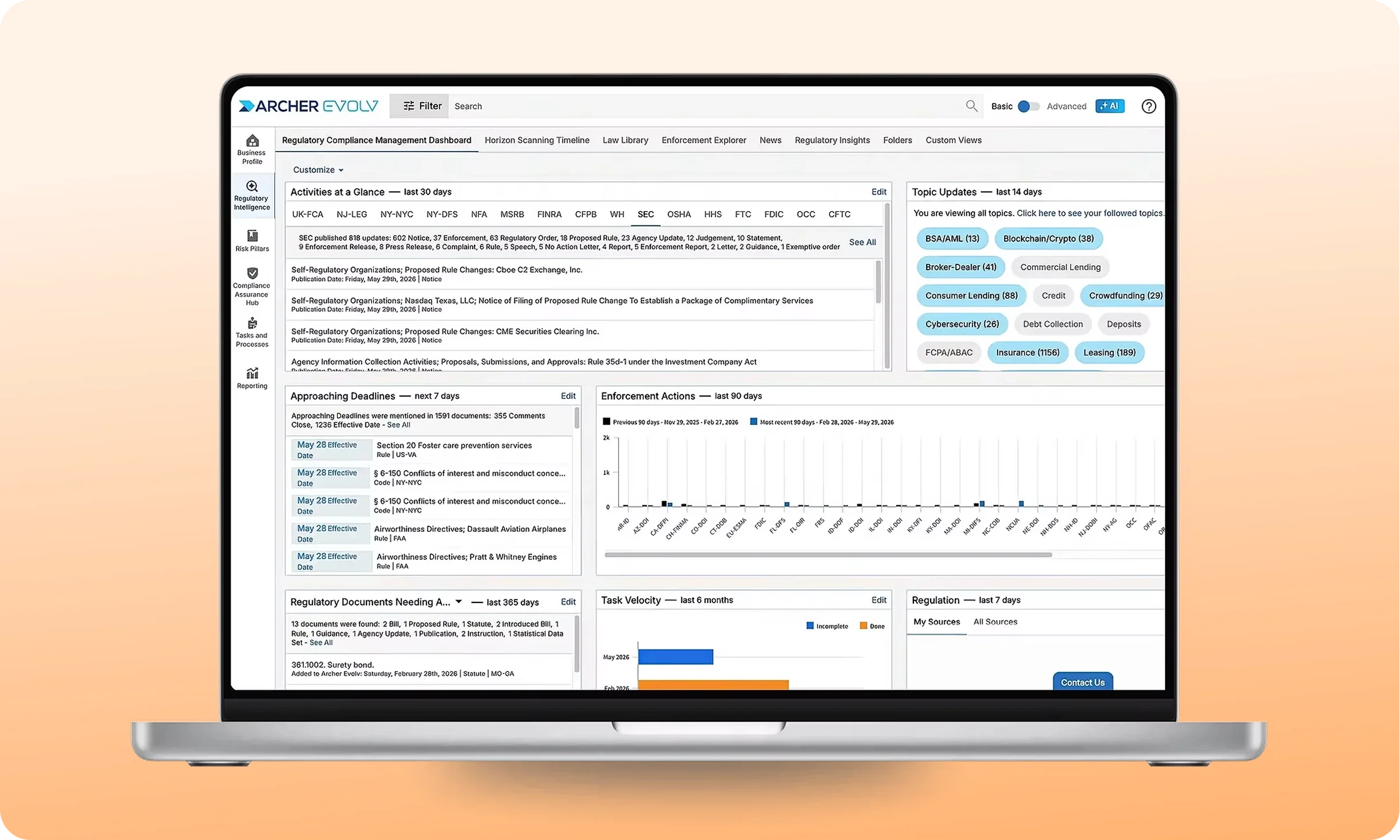
Risk and compliance work does not stop at a border. Here is where Archer connects the same information across regions and the teams responsible for it.
-
Multi-framework compliance
Manage overlapping regulatory and internal requirements through a common control structure while preserving the evidence required for each jurisdiction.
-
Critical-infrastructure risk
Connect risks, controls, assets, incidents and issues to the operations and services they may affect.
-
Cyber and OT governance
Bring technology and operational-security risks into the wider risk process so they can be assessed alongside operational and business consequences.
-
Rischio legato a soggetti terzi
API keys, secrets, and proprietary code pasted into a prompt by mistake.
-
Resilienza operativa
Relate incidents, control failures, business continuity and recovery activities to critical operations and services.
-
AI governance
Connect AI systems used in grid operations or forecasting to NIS2 and EU AI Act obligations alongside existing controls, so AI use stays inside one risk and control structure, not a separate one.
-
Enterprise and regional reporting
Give group leadership comparable information across entities while allowing local teams to retain the context required for their own regulators and management.

Keep local regulatory requirements connected to group-level risk management
Three steps connect what local teams and group leadership already track today.
1
Map different obligations to common controls
Link regional, national and internal requirements to shared controls, while keeping jurisdiction-specific ownership, testing, evidence and exceptions intact.
2
Compare risk across entities and operations
Use a common risk structure across facilities, business units and regions so leaders can see where similar issues appear and where exposure is concentrated.
3
Track remediation across local and group responsibilities
Assign findings and control gaps to accountable owners while giving regional and group teams visibility into progress, overdue actions and recurring weaknesses.
See it before it becomes a finding, wherever it surfaces.
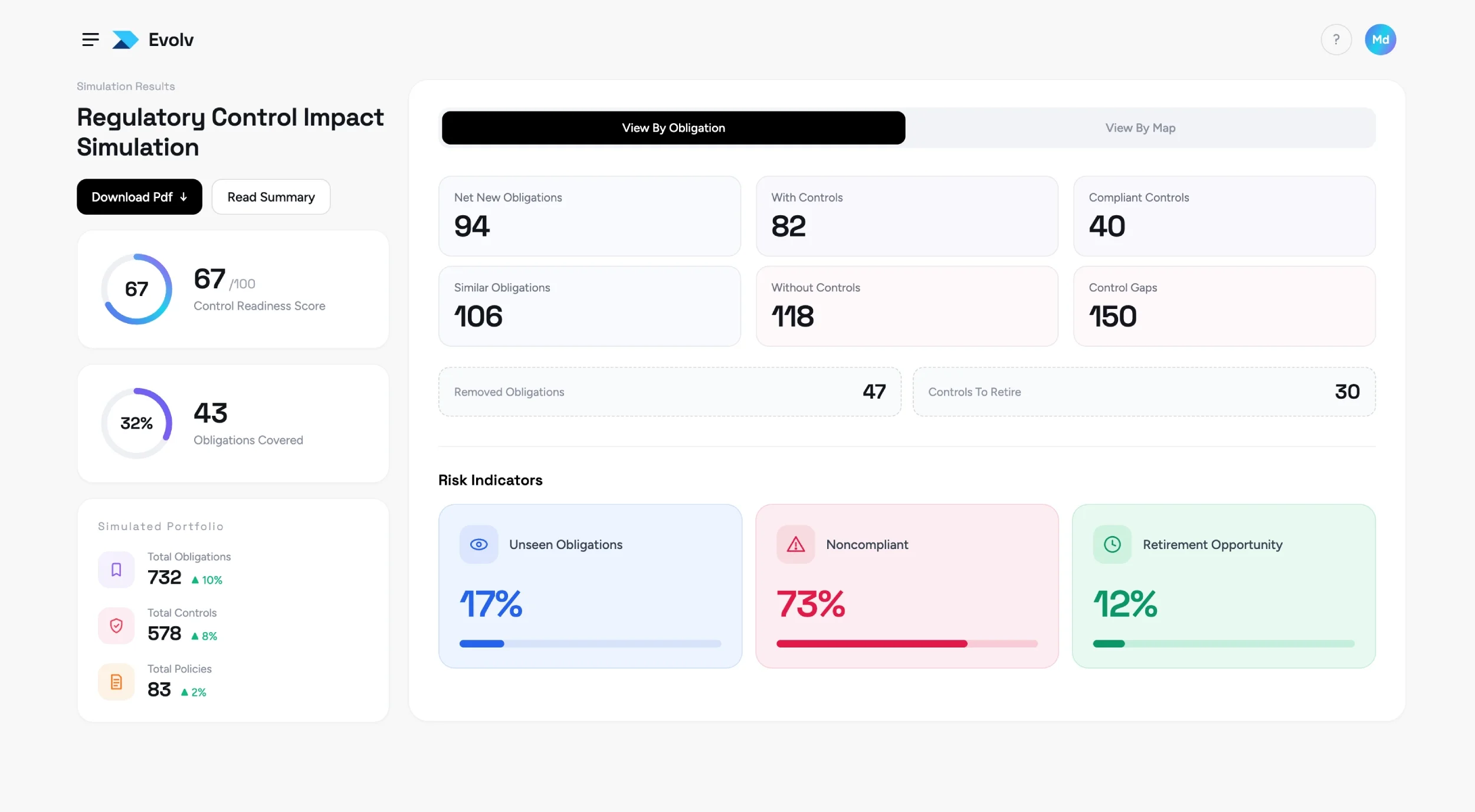
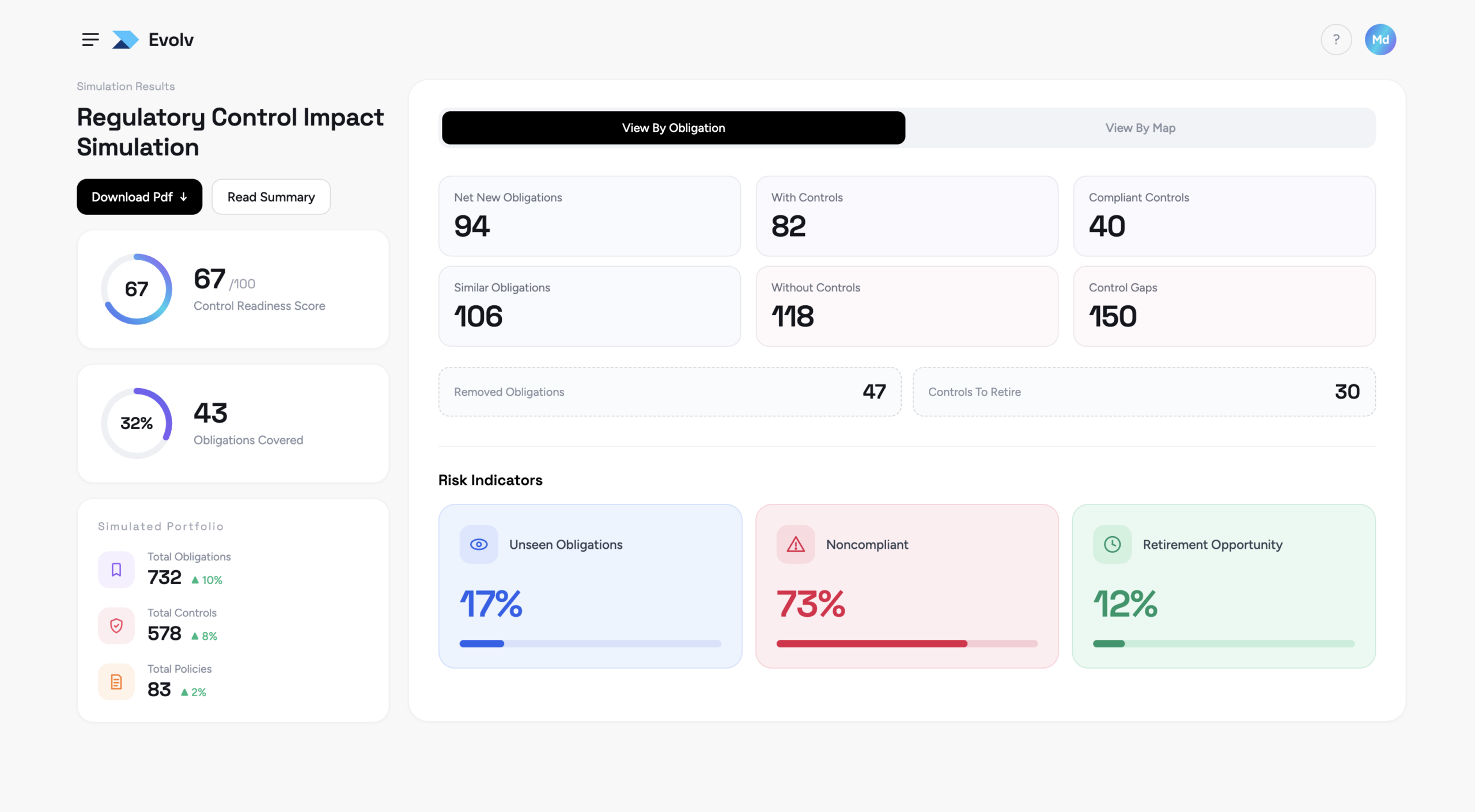
A regulatory update, control issue, supplier exposure, or AI system behaving unexpectedly in one market, may have implications elsewhere, particularly where business units share controls, technology providers, operating processes or infrastructure. Archer keeps the relationships between requirements, controls, risks, evidence and remediation visible across the organization, so regional teams can assess the local impact while group teams can see whether the same issue appears in other entities or jurisdictions.
Reduce duplication while preserving local regulatory context
Connected information pays off across six specific
parts of an international program.
-
Reduce duplicated work across jurisdictions
Common controls and evidence can support multiple obligations, allowing regional teams to meet local requirements without recreating the same work in each country.
-
Handle regulatory change through an established process
New or revised obligations can be mapped into existing controls, assessments and remediation activities instead of being managed as a separate program each time.
-
Understand where cyber and operational risks overlap
Technology exposures and control weaknesses can be linked to the infrastructure, processes and services they could disrupt.
-
Improve oversight of global suppliers and partners
Third-party risk can be assessed consistently while still reflecting regional dependencies, contractual obligations and local regulatory expectations.
-
Make risk information easier to compare across the group
Risk and compliance information can be aggregated across entities and geographies without removing the local evidence and context behind it.
-
Use local compliance information to assess wider impact
The information maintained for regulatory purposes can also help teams understand what changed, where else it may matter and which actions need to follow.
Talk to someone who knows your regulatory footprint.
Whether you own the compliance program as CCO or head of regulatory compliance, report on it as CRO across the group, test it as head of internal audit, or manage local obligations day to day as a regional compliance lead, there’s a specific answer for your role. Tell us where you sit and we’ll start there.
What to expect from the conversation:
-
A concrete answer on how local obligations map to a common control structure.
-
Clarity on how group leadership can compare exposure across regions.
-
An honest look at how local regulatory detail is preserved, not flattened.
-
Proof points specific to your role, from board reporting for CRO to evidence for regional audit.
Recognized across the analyst community.
25 years of purpose-built GRC depth, not general platform breadth.
-
2
Gartner® Magic Quadrant™ per gli strumenti di governance, rischio e conformità: leader nel settore dell’assurance
-
3
Forrester Wave™: Piattaforme per la gestione dei rischi legati a soggetti terzi, primo trimestre 2026
-
4
Verdantix Green Quadrant: Software GRC 2025
Questions your team will ask.
Straight answers, for compliance, risk, and audit.
It’s built to be used by all of them. Compliance, cyber, third-party and operational risk teams work from the same connected information, so a finding in one area doesn’t get tracked separately from the requirements or controls it affects elsewhere.
Requirements are mapped to shared controls, so jurisdiction-specific ownership, testing, evidence and exceptions stay connected to the obligation they satisfy.
Yes. Local teams keep the detail their own regulators expect, while leadership sees a comparable view of exposure and remediation across entities.
Critical suppliers and service providers are assessed and tracked alongside the operations and controls they could affect in each market, not in a separate system.
Mostly spreadsheets and inboxes used to track local obligations, evidence and remediation by hand across countries that don’t share a system today.
Yes. AI systems used in operations or forecasting are brought into the same control structure as your other regulatory and cyber requirements, not managed separately.
See it before it becomes a finding, in any jurisdiction.
Local requirements, common controls, and remediation become one connected structure, comparable across the group and ready when regulators ask.