A recovery plan that always matches the business you run
Processes, applications, facilities, and suppliers sit in one dependency map, so the plan you approved last quarter still fits the company today.
1,200+ organizations run risk and resilience on Archer
-
1,500+
Clienti in 48 paesi
-
50%+
Tra i clienti della classifica Fortune 500
-
65%
Delle organizzazioni che dedicano maggiore impegno alla quantificazione
-
15,000+
Membri della comunità di rischio Archer
The plan holds because the data underneath it always stays current
A site closes on a Tuesday. In Archer, the plan automatically plan opens with the processes that ran there, the applications they depend on, the people who own each step, and a recovery order already set by analysis. Your team can begin executing right away, rather than reconstructing everything first.
-
Plans that carry their own dependencies
-
Recovery order set by analysis, not argument
-
Test results attached to the plan they tested
Workflows that take a plan from documented to demonstrated
The hallmarks of a recovery program that works
Criticality that holds up
Business impact analysis sets recovery objectives from evidence, so the order of recovery holds up when two leaders each call their process critical.
Every dependency attached
Each plan links the strategies, tasks, requirements, contacts, and call trees it needs, so activation hands real work to named roles instead of a PDF.
Testing that leaves proof
Exercises record what passed, what failed, and how long each task actually took, then route findings to owners so the next test starts from a better plan.

Everything you need, nothing you don’t
Eight foundational capabilities keep the program current and running.
1
Recovery strategy library
Approved approaches sit in one catalog by loss type, with duration built from the tasks underneath, so a strategy’s recovery time reflects work rather than hope.
2
Requirements catalog
Equipment, applications, facilities, and vital records link to every plan that needs them, so one change to an asset surfaces on each plan that depended on it.
3
Roles and responsibilities
Plans assign organizational roles rather than named individuals, so a resignation, a reorganization, or a transfer leaves no recovery task without an owner.
4
Notifications and call trees
Call trees document initiators and recipients before you need them, and notification history records how many people you reached and how long reaching them took.
5
Activated plan tracking
During an exercise or a live event, activated strategies and tasks show status and elapsed time, so the person coordinating watches progress instead of chasing it.
6
Continuity risk register
Threats carry likelihood, impact, and category, with mitigation tied back to the plans that address them, so the register drives planning rather than describing it.
How the platform works across your resilience program
Business Continuity and IT DR
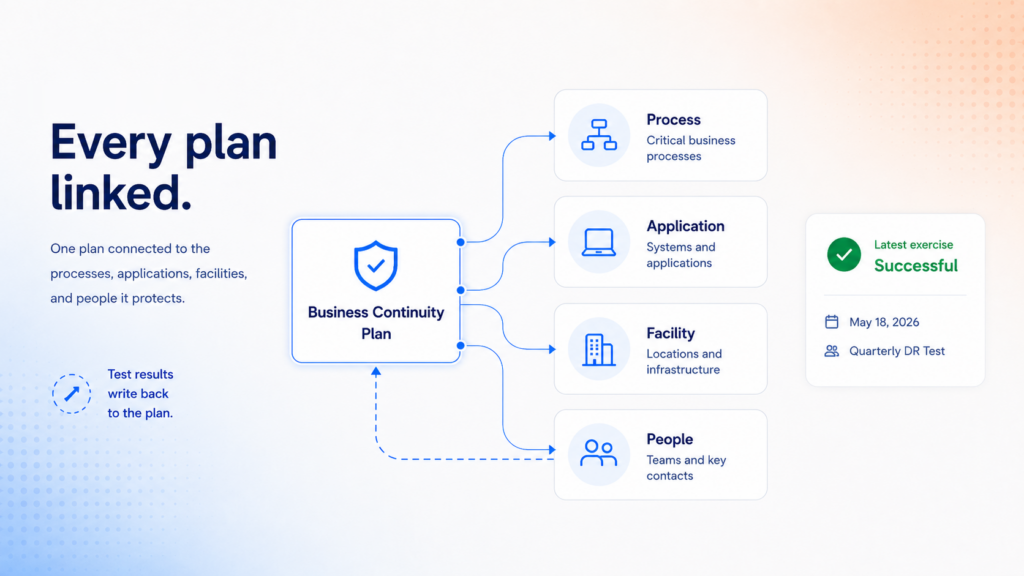
Every plan links to the processes, applications, facilities, and people it protects, with strategies and tasks sequenced underneath. Automated review keeps plans from expiring quietly, and each test writes its results back to the plan it tested.
Business Impact Analysis
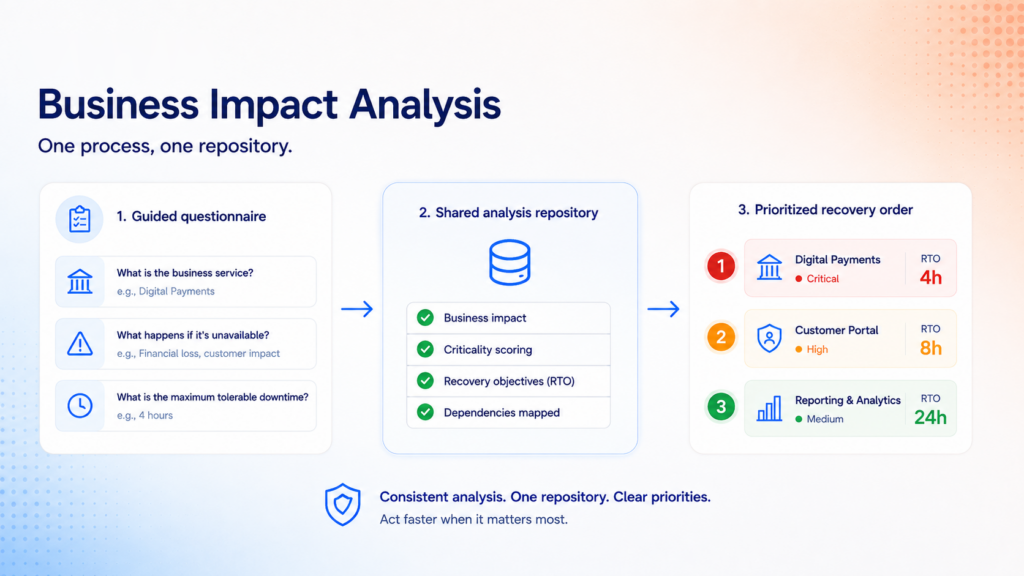
One process for every analysis and one repository for every result. Criticality, recovery objectives, and dependencies come from a consistent questionnaire, so recovery order reflects what the business needs rather than who argued for it most recently.
Incident and Crisis Management
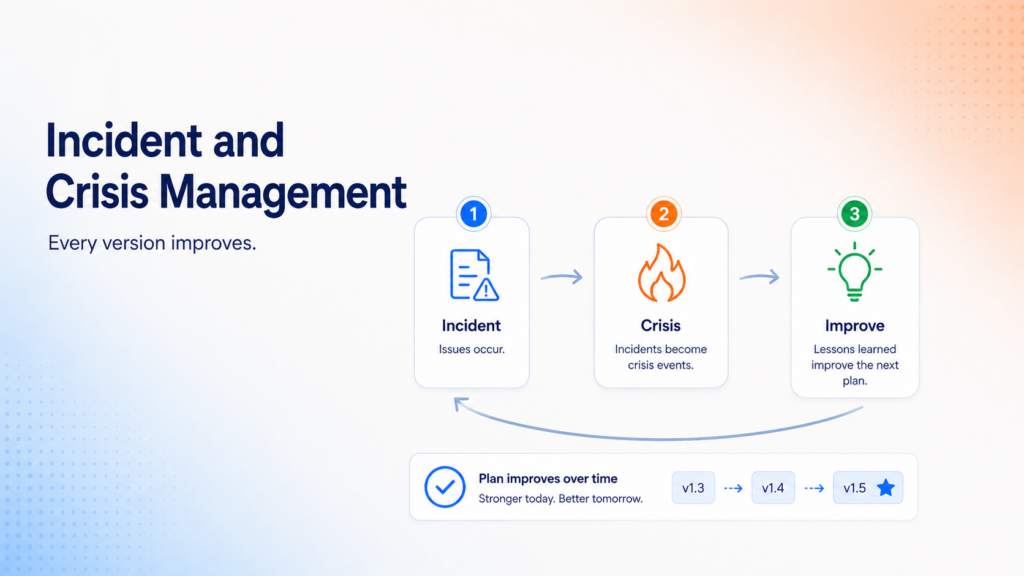
Incidents route to investigators with evidence attached, and the ones that escalate become crisis events that activate the plans already written for them. Lessons learned convert into findings, so the next version of the plan improves on this one.
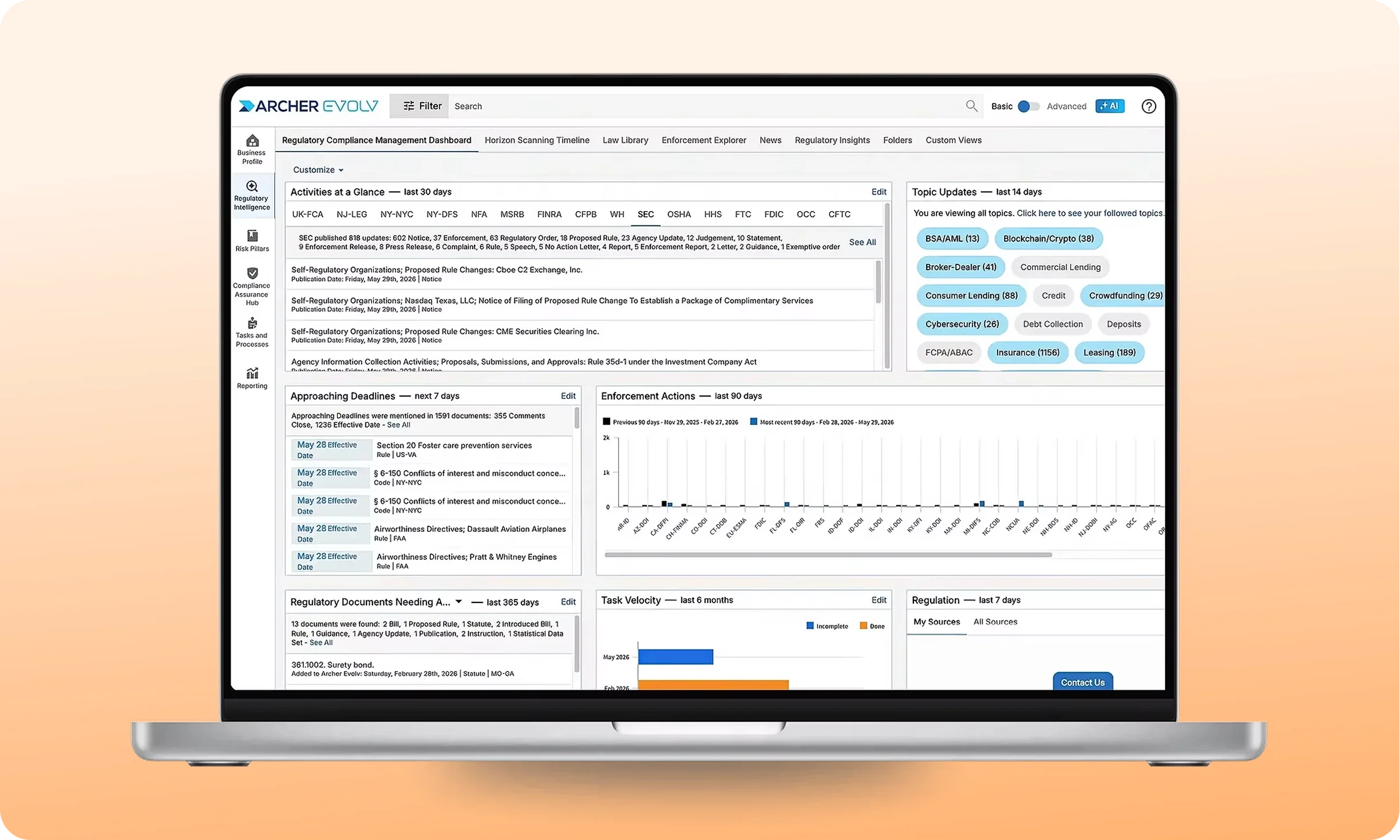
Le immagini riportate sopra non sono screenshot reali del prodotto.
I vantaggi che il tuo team ottiene con Archer
Archer Evolv consente di adottare una strategia integrata per tutte le funzioni relative alla gestione dei rischi e alla conformità.
-
Verifiche più rapide
Riduci i tempi di preparazione dell'audit fino al 40% grazie alla documentazione riutilizzabile e alla raccolta automatizzata.
-
Meno sorprese
Il monitoraggio continuo individua i rischi emergenti prima che si trasformino in incidenti.
-
Costi di attrezzaggio inferiori
Raggruppare gli strumenti GRC che si sovrappongono in un’unica piattaforma e ridurre la proliferazione delle licenze.
-
Reportistica pronta per il consiglio di amministrazione
Genera report per i dirigenti e il consiglio di amministrazione in pochi minuti anziché in giorni.
-
Conformità sicura
Assicuratevi di essere sempre pronti per gli audit in tutti i contesti normativi in cui operate.
-
Si adatta alle tue esigenze
Integra nuove unità, framework e regioni senza dover ricompilare il programma.
Where most continuity programs sit today, and where yours goes
The distance between standard practice and a program that survives a test.
Most programs today
Dependency picture
Ecco cosa riceverai
-
Rebuilt for each analysis
Most programs today
Plan currency
Ecco cosa riceverai
-
Reviewed when someone remembers
Most programs today
Recovery order
Ecco cosa riceverai
-
Negotiated between leaders
Scopri i nostri casi di studio

Eastern Bank utilizza Archer per ottimizzare i processi aziendali e semplificare la conformità normativa
- Visualizza il caso di studio:
- Visualizza il caso di studio: Banorte Bank ottiene un quadro preciso dei rischi grazie ad Archer
- Visualizza il caso di studio: Intuitive Surgical è passata ad Archer SaaS per intraprendere un percorso verso una gestione del rischio più efficace
- Visualizza il caso di studio: Resilienza operativa per gli istituti di servizi finanziari
Eastern Bank utilizza Archer per ottimizzare i processi aziendali e semplificare la conformità normativa

Banorte Bank ottiene un quadro preciso dei rischi grazie ad Archer

Intuitive Surgical è passata alla piattaforma SaaS Archer per intraprendere un percorso verso una gestione del rischio più efficace
Resilienza operativa per gli istituti di servizi finanziari
Scelto con fiducia dai team che si assumono il rischio
I responsabili dei settori rischio, conformità e audit raccontano cosa è cambiato dopo l’implementazione di Archer Evolv.

Abbiamo riconosciuto la necessità di una piattaforma software GRC che fosse fondamentale per la nostra capacità di migliorare e trasformare i nostri processi aziendali in materia di rischio e conformità.

Archer è la fonte di verità e ci fornisce un'ottima traccia di audit. In qualità di compagnia assicurativa, siamo sottoposti a verifiche da parte di ogni ente governativo. Ora possiamo dire: “Ecco il nostro archivio, date un’occhiata”.

L'aggregazione dei rischi è un aspetto fondamentale per noi: ci permette di individuare dove si concentrano i rischi all'interno dell'organizzazione e di garantire una maggiore visibilità ai consigli di amministrazione e ai dirigenti.

Turkcell utilizza Archer come principale strumento di GRC all’interno dell’azienda. Ci offre un quadro di governance trasparente e sicuro.

Archer ci offre la possibilità di sintetizzare le cose in cifre e dettagli concreti anziché in generalità. Si tratta di una gestione basata sui fatti anziché sull'intuizione o sulla sensazione.

Mette in comunicazione tutte le diverse applicazioni, consentendoti così di sfruttare tali riferimenti incrociati e collegamenti per prendere decisioni aziendali più efficaci, poiché hai tutto a portata di mano in un unico posto.
Questions we hear from continuity directors
Answers to what buyers ask before choosing Archer.
Most programs stand up BC/DR planning in weeks on prebuilt content, starting with one business unit or one set of critical processes. Business impact analysis, incident management, and crisis management layer on afterward on the same platform.
No. Existing analyses load into the BIA repository, and campaigns refresh them on a schedule rather than restarting from scratch. What changes is that criticality and recovery objectives now sit beside the plans and dependencies they govern.
Applications, devices, facilities, information assets, and third parties come from the enterprise catalog, which integrates with the systems that own that data. Plans reference those records, not copies, so a change surfaces on every plan it touches.
Plan owners work through role-based dashboards and assigned tasks rather than the full application. Reviews, tests, and approvals arrive as work items with due dates, so taking part in the program does not require learning a governance platform.
Each plan carries its review history, its test results, the findings testing produced, and the remediation that closed them. That trail answers the question supervisors now ask: not whether a plan exists, but whether you have shown that it works.