
Connect regulatory, operational and cyber risk
A regulatory change, control failure, supplier issue or cyber finding rarely stays within one team.
Energy and utility organizations are managing aging infrastructure, expanding digital and OT environments, complex supplier networks and demanding reliability requirements at the same time. Regulatory obligations such as NERC CIP and FERC requirements add another layer of accountability across teams that may already be working in different systems.
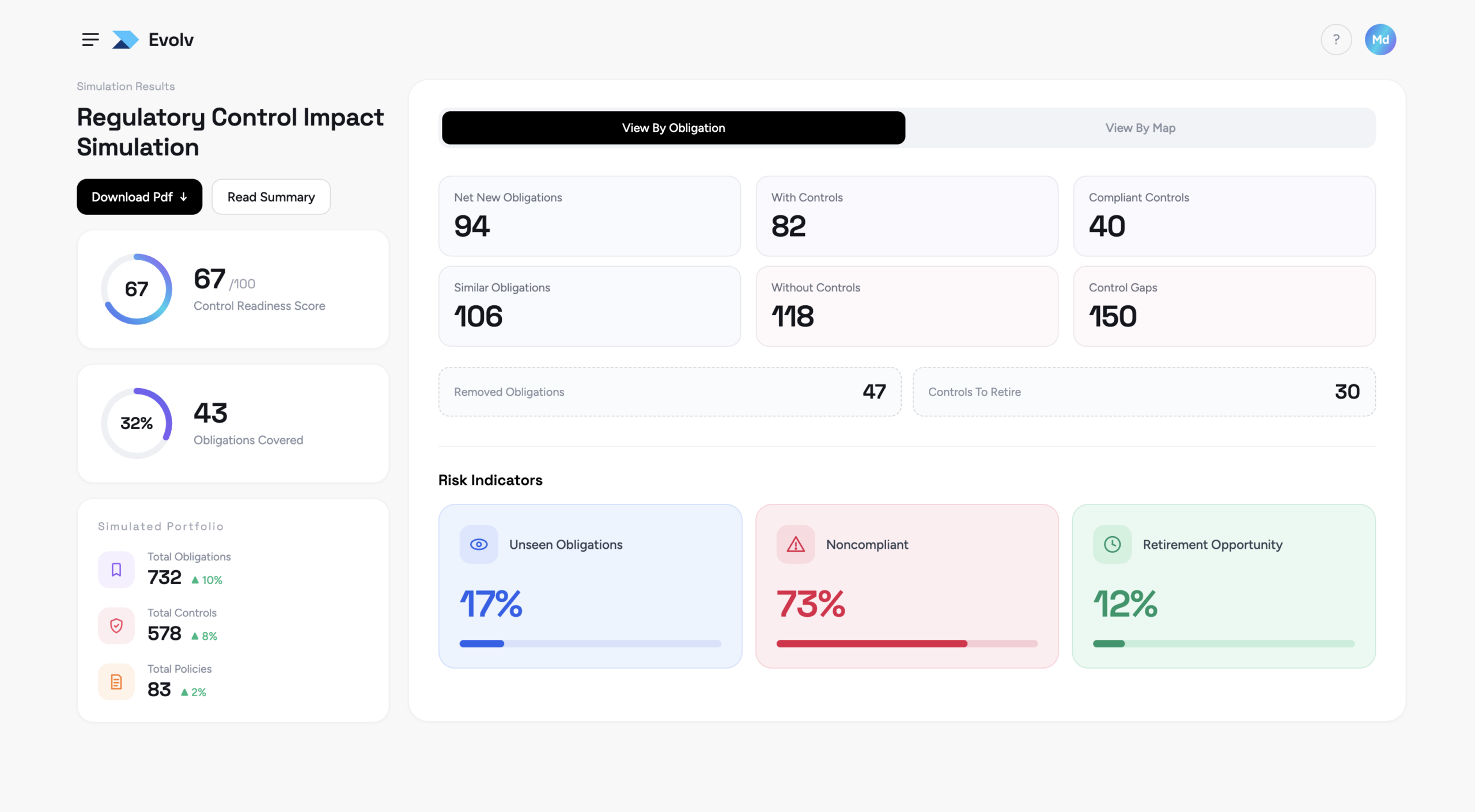
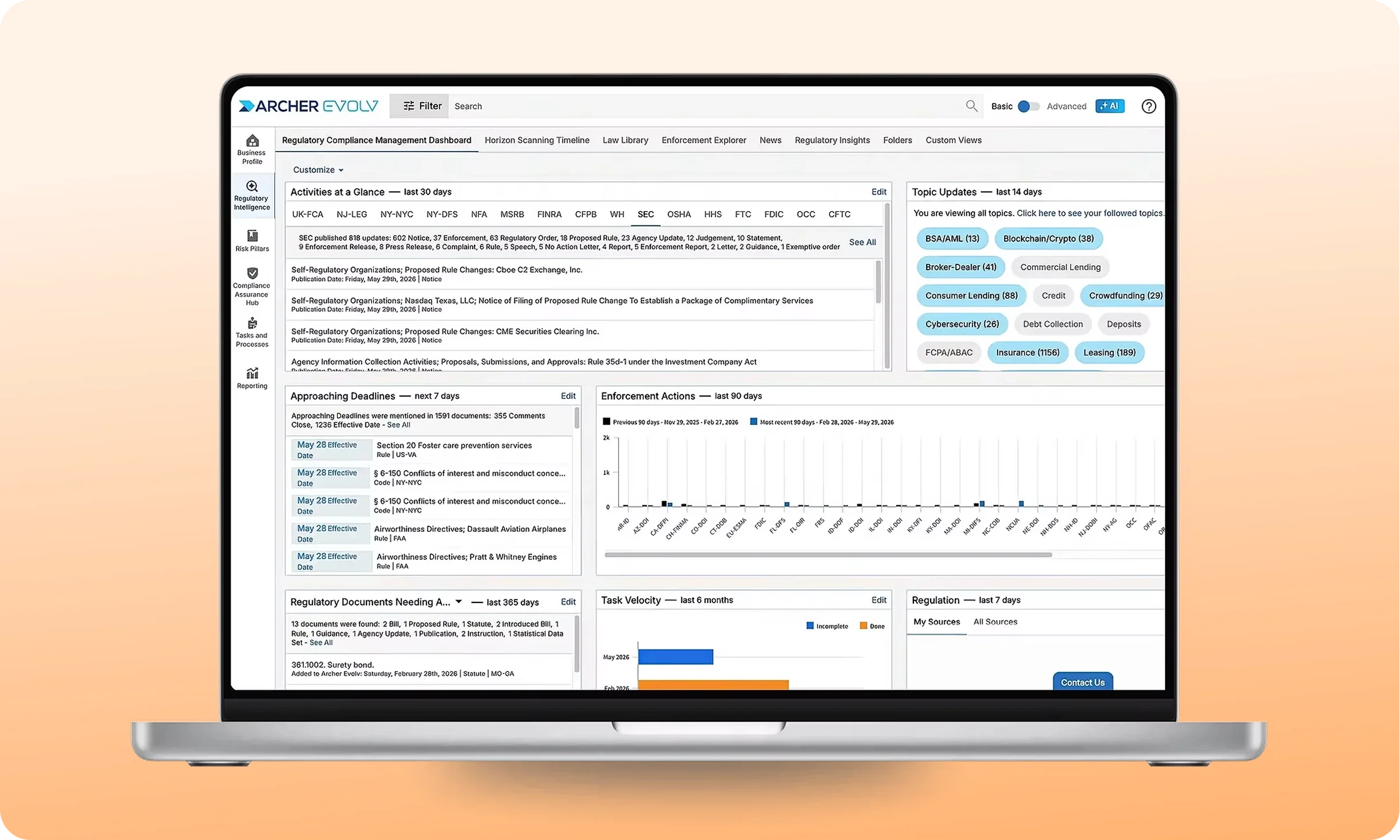
Archer helps connect regulatory requirements, controls, operational risk, cyber risk, third-party exposure, issues and remediation. Teams can see how risks relate to critical services, understand where action is needed and maintain the evidence required for audit and regulatory review.
Built for complex, regulated enterprises · 25+ years in GRC · Trusted by 1,500 organizations across 70+ countries
-
1,500+
法人顧客
-
25+
Years as a trusted system of record
-
半分
フォーチュン500にランクインする企業の顧客のうち
-
8,000+
追跡対象の規制・基準策定機関
What is governance, risk and compliance for energy and utilities?
Governance, risk and compliance for energy and utilities is the practice of connecting regulatory obligations such as NERC CIP and FERC requirements to the controls, cyber and operational risk information, and third-party oversight that already exist across the organization. Done well, a compliance record, a security finding and an operational issue can be assessed in the same context, rather than as separate exercises tracked by different teams on different schedules.
The difficulty is often in connecting the information already available
Energy and utility organizations usually have substantial amounts of compliance, security, operational and supplier information. The challenge is that these records are often managed by different teams, with different methods and reporting cycles.
That can make it harder to understand whether a control weakness, supplier issue, technology exposure, or AI system used in grid operations or forecasting, has implications elsewhere in the organization. It can also increase the effort required to prepare for audits, demonstrate compliance and explain material risk to leadership.
Archer helps teams connect these records so they can assess issues in context rather than treating each risk or compliance activity as a separate exercise.
Every risk and compliance domain,
in one connected record.
Energy and utility risk and compliance work rarely happens in one place. Here is where Archer connects the same information across the teams responsible for it.
-
Compliance management
氏名、社会保障番号、口座番号、およびモデルが閲覧したり口に出したりしてはならないその他の個人識別情報。
-
Cyber and OT risk
境界外へ流出すると情報漏洩の通知対象となる患者記録、診断結果、および診療記録。
-
サードパーティ・リスク
カード番号、口座情報、およびPCI DSSの対象となるその他のデータ。
-
Operational risk and resilience
APIキー、シークレット、および独自開発のコードを誤ってプロンプトに貼り付けてしまった。
-
Audit and regulatory readiness
契約、取引条件、およびその他、お客様の保険契約ですでに制限されている情報。
-
AI governance
技術的には規制の問題とは無関係であっても、自社のAI利用ルールに反する行為。
-
Executive risk reporting
Provide leadership with a consolidated view of material exposure, control effectiveness, unresolved issues and remediation progress.

Keep regulatory requirements tied to the controls and operations they affect
Three steps connect what compliance, cyber, and operations teams already track today.
1
Connect requirements to the controls
that support them
Map NERC CIP, FERC and other applicable obligations to common controls, then maintain ownership, testing, evidence and exceptions against those controls.
2
Relate cyber and OT issues to critical operations
Connect security findings, technology exposures and control weaknesses to the assets, processes and services they may affect.
3
Keep remediation visible
Assign findings and control gaps to accountable owners, track progress and retain the supporting evidence needed for internal review, audit and regulatory examination.
See it before it becomes a finding.
A regulatory change, control failure, supplier issue, cyber finding, or AI model producing an unreliable result, rarely stays within one team. The same issue can affect several controls, business units, assets or regulatory commitments. Archer keeps those relationships visible, so when something changes, teams can understand which obligations, controls, risks and operations may also require review, and direct the resulting work to the right owners with the supporting context intact.
Reduce repeated work and make prioritization easier
Connected information pays off across six
specific parts of the program.
-
Lower the effort required for audits
and regulatory examinationsWhen obligations, controls, testing and evidence remain connected, teams can respond to requests using information already maintained through normal risk and compliance work.
-
Identify weak controls earlier
Assessment results, incidents, exceptions and risk indicators can be reviewed together, making recurring or connected issues easier to spot.
-
Reduce duplicated compliance work
Common controls and evidence can support more than one applicable requirement, helping teams avoid running separate processes for closely related obligations.
-
Improve oversight of critical suppliers and technology partners
違反は推論の前にブロックされ、生成されることはなく、各ブロックはそれを必要とした義務に紐づけられている。
-
Help leaders understand which exposures need attention first
Technical findings and compliance issues can be related to operational impact, giving decision-makers better context for prioritization.
-
Use existing GRC information to assess the impact of change
The information maintained for compliance can also provide the context needed to understand what changed, what it affects and where action is required.
Talk to someone who knows your regulatory environment.
Whether you own the compliance program as CCO or head of regulatory compliance, report on it as CRO, test it as head of internal audit, or manage it day to day as head of OT and cyber security, there’s a specific answer for your role. Tell us where you sit and we’ll start there.
この会話で何が期待できるか:
-
A concrete answer on how NERC CIP and FERC obligations map to your existing controls.
-
Clarity on how cyber and OT findings connect to operational risk.
-
An honest look at how third-party and supplier risk is tracked.
-
Proof points specific to your role, from board reporting for CRO to evidence for audit.
アナリスト界隈で広く認められている。
25 years of purpose-built GRC depth, not general platform breadth.
-
2
ガートナー® マジック・クアドラント™:ガバナンス、リスク、コンプライアンス(GRC)ツール、アシュアランス分野のリーダー
-
3
Forrester Wave™:サードパーティ・リスク管理プラットフォーム、2026年第1四半期
-
4
Verdantix グリーンスクエア:GRCソフトウェア 2025
チームから寄せられるであろう質問。
コンプライアンス、リスク、監査に関する率直な回答。
It’s built to be used by all of them. Compliance, cyber, third-party and operational risk teams work from the same connected information, so a finding in one area doesn’t get tracked separately from the requirements or controls it affects elsewhere.
Requirements are mapped to the controls that support them, so ownership, testing, evidence and exceptions stay connected to the standard they satisfy.
Yes. Local teams keep the detail their own regulators expect, while leadership sees a consolidated view of exposure and remediation.
Critical suppliers and service providers are assessed and tracked alongside the operations and controls they could affect, not in a separate system.
Mostly spreadsheets and inboxes used to track findings, evidence and remediation by hand across teams that don’t share a system today.
Yes. AI systems used in operations or forecasting are brought into the same control structure as your other regulatory and cyber requirements, not managed separately.
Connect risk before it becomes a finding.
Regulatory requirements, controls, cyber risk and remediation become one connected record, evidenced and ready when auditors and examiners ask.
