Connect regulatory, operational and cyber risk
A regulatory change, control failure, supplier issue or cyber finding rarely stays within one team.
Energy and utility organizations are managing aging infrastructure, expanding digital and OT environments, complex supplier networks and demanding reliability requirements at the same time. Regulatory obligations such as NERC CIP and FERC requirements add another layer of accountability across teams that may already be working in different systems.
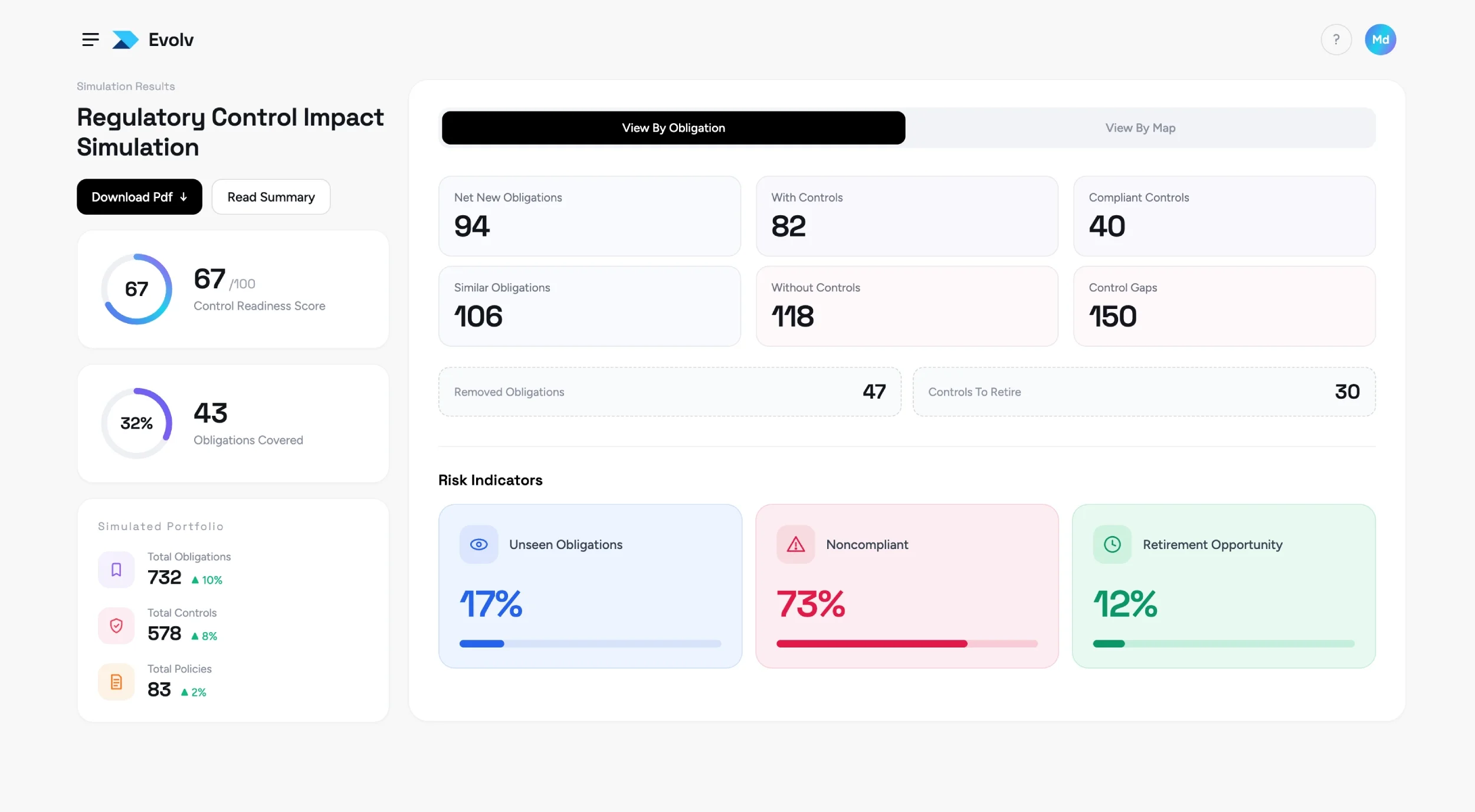
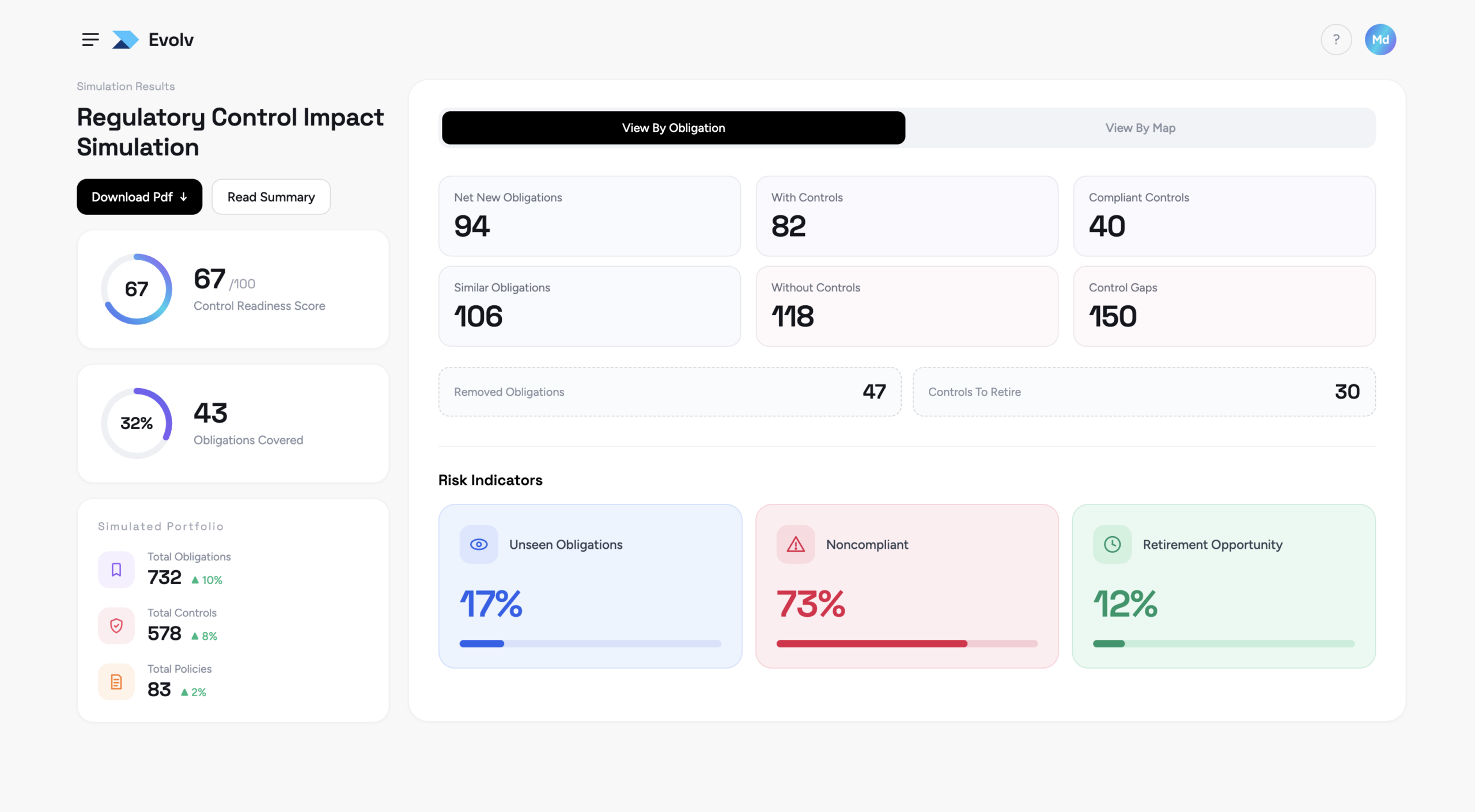
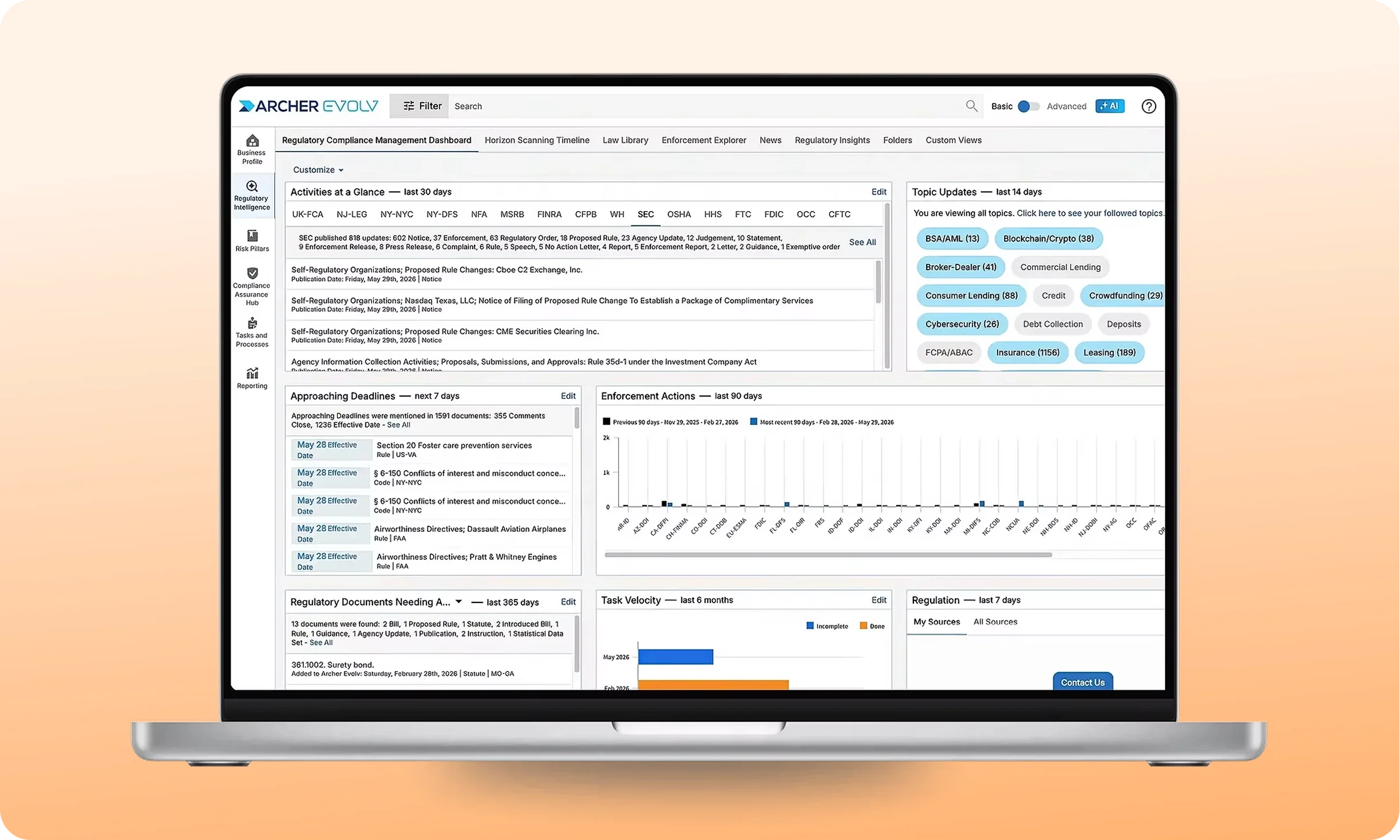
Archer helps connect regulatory requirements, controls, operational risk, cyber risk, third-party exposure, issues and remediation. Teams can see how risks relate to critical services, understand where action is needed and maintain the evidence required for audit and regulatory review.
Built for complex, regulated enterprises · 25+ years in GRC · Trusted by 1,500 organizations across 70+ countries
-
1,500+
Clientes empresariales
-
25+
Years as a trusted system of record
-
La mitad
De los clientes de la lista Fortune 500
-
8,000+
Fuentes normativas y de establecimiento de normas objeto de seguimiento
What is governance, risk and compliance for energy and utilities?
Governance, risk and compliance for energy and utilities is the practice of connecting regulatory obligations such as NERC CIP and FERC requirements to the controls, cyber and operational risk information, and third-party oversight that already exist across the organization. Done well, a compliance record, a security finding and an operational issue can be assessed in the same context, rather than as separate exercises tracked by different teams on different schedules.
The difficulty is often in connecting the information already available
Energy and utility organizations usually have substantial amounts of compliance, security, operational and supplier information. The challenge is that these records are often managed by different teams, with different methods and reporting cycles.
That can make it harder to understand whether a control weakness, supplier issue, technology exposure, or AI system used in grid operations or forecasting, has implications elsewhere in the organization. It can also increase the effort required to prepare for audits, demonstrate compliance and explain material risk to leadership.
Archer helps teams connect these records so they can assess issues in context rather than treating each risk or compliance activity as a separate exercise.
Every risk and compliance domain,
in one connected record.
Energy and utility risk and compliance work rarely happens in one place. Here is where Archer connects the same information across the teams responsible for it.
-
Compliance management
Nombres, números de la Seguridad Social, números de cuenta y otros datos de identificación personal que una modelo no debe ver ni repetir.
-
Cyber and OT risk
Historiales de pacientes, diagnósticos y notas clínicas que activan la notificación de una filtración si salen del perímetro de seguridad.
-
Riesgo de terceros
Números de tarjetas, datos de cuentas y otros datos regulados por la norma PCI DSS.
-
Operational risk and resilience
Claves de API, secretos y código propio pegados por error en una línea de comandos.
-
Audit and regulatory readiness
Los contratos, las condiciones de las operaciones y cualquier otra información que ya esté restringida por tu póliza.
-
AI governance
Acciones que entran en conflicto con tus propias normas de uso de la IA, incluso cuando, técnicamente, no se trate de ninguna normativa.
-
Executive risk reporting
Provide leadership with a consolidated view of material exposure, control effectiveness, unresolved issues and remediation progress.

Keep regulatory requirements tied to the controls and operations they affect
Three steps connect what compliance, cyber, and operations teams already track today.
1
Connect requirements to the controls
that support them
Map NERC CIP, FERC and other applicable obligations to common controls, then maintain ownership, testing, evidence and exceptions against those controls.
2
Relate cyber and OT issues to critical operations
Connect security findings, technology exposures and control weaknesses to the assets, processes and services they may affect.
3
Keep remediation visible
Assign findings and control gaps to accountable owners, track progress and retain the supporting evidence needed for internal review, audit and regulatory examination.
See it before it becomes a finding.
A regulatory change, control failure, supplier issue, cyber finding, or AI model producing an unreliable result, rarely stays within one team. The same issue can affect several controls, business units, assets or regulatory commitments. Archer keeps those relationships visible, so when something changes, teams can understand which obligations, controls, risks and operations may also require review, and direct the resulting work to the right owners with the supporting context intact.
Reduce repeated work and make prioritization easier
Connected information pays off across six
specific parts of the program.
-
Lower the effort required for audits
and regulatory examinationsWhen obligations, controls, testing and evidence remain connected, teams can respond to requests using information already maintained through normal risk and compliance work.
-
Identify weak controls earlier
Assessment results, incidents, exceptions and risk indicators can be reviewed together, making recurring or connected issues easier to spot.
-
Reduce duplicated compliance work
Common controls and evidence can support more than one applicable requirement, helping teams avoid running separate processes for closely related obligations.
-
Improve oversight of critical suppliers and technology partners
Las infracciones se bloquearon antes de la inferencia, nunca se generaron, y cada bloqueo se remonta a la obligación que lo exigió.
-
Help leaders understand which exposures need attention first
Technical findings and compliance issues can be related to operational impact, giving decision-makers better context for prioritization.
-
Use existing GRC information to assess the impact of change
The information maintained for compliance can also provide the context needed to understand what changed, what it affects and where action is required.
Talk to someone who knows your regulatory environment.
Whether you own the compliance program as CCO or head of regulatory compliance, report on it as CRO, test it as head of internal audit, or manage it day to day as head of OT and cyber security, there’s a specific answer for your role. Tell us where you sit and we’ll start there.
Qué puedes esperar de la conversación:
-
A concrete answer on how NERC CIP and FERC obligations map to your existing controls.
-
Clarity on how cyber and OT findings connect to operational risk.
-
An honest look at how third-party and supplier risk is tracked.
-
Proof points specific to your role, from board reporting for CRO to evidence for audit.
Reconocida por toda la comunidad de analistas.
25 years of purpose-built GRC depth, not general platform breadth.
-
2
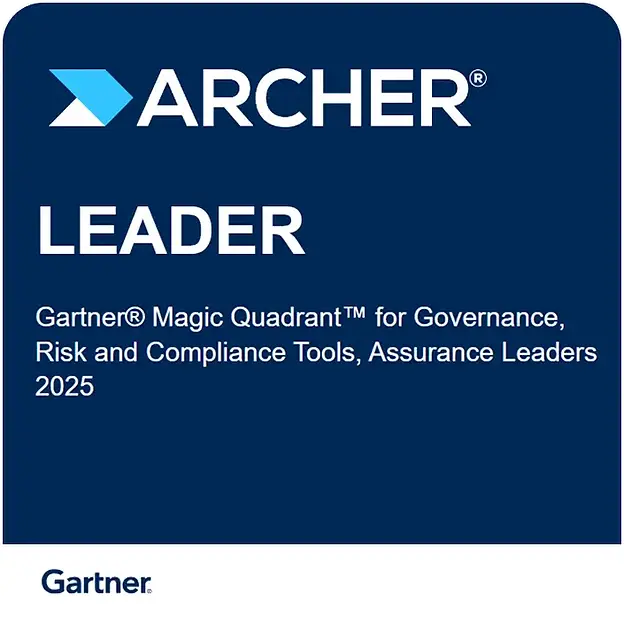
Cuadrante Mágico™ de Gartner® para herramientas de gobernanza, riesgo y cumplimiento normativo: líderes en garantía de cumplimiento
-
3
Forrester Wave™: Plataformas de gestión de riesgos de terceros, primer trimestre de 2026
-
4
Cuadrante Verde de Verdantix: Software de GRC 2025
Preguntas que te hará tu equipo.
Respuestas claras en materia de cumplimiento normativo, riesgos y auditoría.
It’s built to be used by all of them. Compliance, cyber, third-party and operational risk teams work from the same connected information, so a finding in one area doesn’t get tracked separately from the requirements or controls it affects elsewhere.
Requirements are mapped to the controls that support them, so ownership, testing, evidence and exceptions stay connected to the standard they satisfy.
Yes. Local teams keep the detail their own regulators expect, while leadership sees a consolidated view of exposure and remediation.
Critical suppliers and service providers are assessed and tracked alongside the operations and controls they could affect, not in a separate system.
Mostly spreadsheets and inboxes used to track findings, evidence and remediation by hand across teams that don’t share a system today.
Yes. AI systems used in operations or forecasting are brought into the same control structure as your other regulatory and cyber requirements, not managed separately.
Connect risk before it becomes a finding.
Regulatory requirements, controls, cyber risk and remediation become one connected record, evidenced and ready when auditors and examiners ask.